

Introduction
On February 28th, 2026, the US military attacked the Minab all-girls school in Iran with two Tomahawk missiles, killing 168 people most of whom were children. This initiated another war of aggression and continued the long history of US imperialist interventions in the Middle East. The Minab massacre is just one example of a long list of atrocities at the hands of the rulers in this country, under the banner of spreading “democracy” and “freedom.” The military operation on Iran, named operation “Epic Fury” by the US military, has been mockingly renamed by those opposed to the US-Israel war as “Operation “Epstein Fury.” This highlighted the suspicious timing of launching their war of aggression, done simultaneously with the release of the Epstein Files, which further detailed the decades-long scandal and cover-up that implicated Trump, many other government officials, and some of the richest and most powerful people in the world—both Republicans and Democrats—as being literal pedophiles or their protectors and defenders.
On top of the crimes of mass murder abroad, the US ruling class benefits through the exploitation, extortion, abuse, capture, and murder of the most oppressed people inside the borders of this country. And while two million people suffer inside the prisons and jails of the US, the greatest criminals of all are sitting at the top, unscathed. This is the most basic contradiction in our society when it comes to ideas of “justice”: millions of people waste away inside the dungeons and cages of the US prison system while the greatest criminals in the world sit in mansions, benefitting from the immiseration of billions of people. No matter the crimes of the men and women locked up inside prisons and jails, they will always pale in comparison to the crimes of this country and the ruling class, the capitalist-imperialists.

This is what Malcolm X termed “the American Nightmare.” It’s what must be brought to an end to liberate humanity. Much more could be said about the injustice system and the mass incarceration machine in this country.
From the ways laws are written and enforced to oppress the masses of people, with the 100:1 crack and powder cocaine sentencing disparity beginning in the 80’s, to the gun laws today, to the racist and prejudiced courts, who condemn the innocent to death row and systematically sentence oppressed people to longer prison terms for the same crimes as wealthier, privileged sections of society, to the inhumane conditions and mistreatment prisoners face inside the jails and prisons, locked away for years, stealing years of their lives while subjecting people to a culture of parasitism and trauma. Mass incarceration in the US serves the function of containment of the “unruly” populations the capitalist system had deemed no longer useful or no longer profitable to it.
In summary, as US industry began to leave, and as Black people and other rebellious sections of society began to rock the foundation of this country with the threat of revolution, mass incarceration was America’s solution to put a stop to it. Now we must put a stop to them.
The Spark is a national issue of Cracks at Hotel California, a newsletter primarily distributed inside Cook County Jail (CCJ) in Chicago, IL. Since 2024, Cracks has been used as an organizing tool for prisoners and their families to come together to collectively struggle against conditions and mistreatment at CCJ, highlighting news reported from the inside (often disregarded by the local media), report on new developments regarding state laws and the jail’s policies, and work through the obstacles and contradictions in the fight against the mass incarceration machine. From these efforts to write and distribute Cracks, there have been multiple organizing efforts initiated from the jail, with prisoners coming together to write collective analysis of conditions and life inside, study groups reading Cracks and radical materials together, and protests both inside and outside condemning the brutal life at CCJ, where 6,000 people are subjected to “hell on Earth” and can be held for years awaiting trial. The Spark is an effort to broaden our approach, to connect with prisoners around the country, and spread the struggle against mass incarceration. Chinese Communist and revolutionary leader, Mao Zedong, once invoked an old Chinese phrase in his writing to inspire party cadre: “A single spark can start a prairie fire.” When masses of people struggle against their oppressors, they can inspire more people to fight, and the fight against the system grows, until the oppressor is overthrown and the masses have the opportunity to take power and build a society free from exploitation and oppression. In the US, prisoners and a prison movement can be that spark.
Last year, Cracks initiated two significant protests at Cook County Jail, giving us a glimpse of that spark. On August 21st, 2025, prisoners organized protests throughout the jail, raising demands against conditions, mistreatment, and policies while their loved ones and supporters on the outside held a protest. We called for this protest in commemoration of Black August and held it on the 54th anniversary of the killing of the revolutionary prisoner and communist, George Jackson, one of the most important historical thinkers and actors in the US prison movement. The Spark is encouraging prisoners, their loved ones, and supporters to organize similar demonstrations, actions, and protests this year on August 21st, in an effort to begin to develop a national day of protest against mass incarceration, or what we are calling, George Jackson Day. The Spark envisions calls for protests going coast to coast in the jails and prisons, uniting organizations of prisoners and progressive forces on the outside, to bring people out for George Jackson Day, exposing the mass incarceration machine, and rebuilding the prison movement. If you are interested in working with us to develop this kind of national day of protest, reach out and let’s work together to unite all who can be united in making this a spark to reignite the national prison movement.
The second protest taken up by prisoners in Cook County was organizing for the National Day of Protest Against Police Brutality on October 22nd, or O22 for short. Started in the 90’s by the Revolutionary Communist Party, veterans in the Black Liberation Movement, and activists fighting police brutality, O22 has gained momentum in recent years, with more militant and confrontational protests against police precints and government officials demanding an end to police brutality and jailing killer cops. Families Demanding Justice, a national network of families who have lost loved ones at the hands of police, organized over 20 O22 protests in 2025, bringing out impacted families and victims of police brutality from across the country to speak out and share their stories, march with supporters on government buildings, and declare that police brutality and murder is a national epidemic and must be stopped (with police in the US having killed more than 8,000 people since 2020). The call was taken up in Cook County Jail through Cracks, and prisoners staged their own speak-out, sharing stories about police brutality and uplifting the names and stories of people killed by police. Having more time to plan and organize, The Spark hopes to encourage prisoners around the country to take up the call to organize O22 protests on October 22nd. While prisoners at CCJ have taken collective action and won small victories through these acts, these two protests in particular were significantly larger and embraced revolutionary politics, raising up prisoners’ consciousness in the process, pointing to how the fight was greater than their immediate grievances.
This newsletter contains two edited articles from Cracks and a section from the Specter That Still Haunts series by Kenny Lake from the journal Going Against the Tide. Our hope is they can give readers a brief overview into some of the history of the prison movement and politics. Additionally, this newsletter seeks to start a correspondence with you: What is life like at your jail or prison? What are the conditions like? What are the biggest issues among prisoners, and what’s stopping people from coming together to make demands? What will it take to build a national prison movement?

The publishers of The Spark are committed revolutionaries, and in order to make a successful revolution in this country, the masses of people who have been oppressed by this system must begin to learn how to collectively struggle together against their oppression. This means millions of people, organized, and moving across different fronts against the system as a whole, moving through the ebbs and flows of revolution to victory. We believe prisoners can and must play a decisive role in this struggle and can inspire millions more to move against the enemy system, be it in the forms of fighting oppressive landlords, ICE gestapo, or killer cops. In order to do this, we need a prison movement that spreads far and wide throughout the US, uniting with the families of victims of police brutality fighting for justice, residents fighting slum-like conditions inside housing projects, revolutionary activists dedicating their lives to fighting alongside the masses, and other progressive forces in society—all moving together to transform blossoming movements into a revolution.
COMMEMORATE BLACK AUGUST 2026
Black August (BA) is a commemorative month which recognizes the sacrifices and struggles of Black people in the ongoing fight for freedom and liberation from the American Nightmare. It’s a month-long observance for reflection, study, and self-discipline, in honor and memory of those who came before us and showed us the path forward in how to end oppression, through struggle by any means necessary. Not to be confused with Black History Month, a system-approved, general celebration of Black people in the US, Black August is about resistance—how the oppressed have fought back against their oppressors, won their liberation through this struggle (even only for a short period), and must continue the struggle today. With its roots in the prison movement, BA is a time for inmates to come together in collective struggle, condemn the conditions of Black and oppressed people both inside and outside the prisons and jails, and highlight mass incarceration as one of the primary tools by which Black people are oppressed by the system today. While it has its roots in the Black Liberation Movement, BA is significant not only for Black people but all oppressed people fighting for liberation, and it has special significance for prisoners locked away inside the cages across the US.
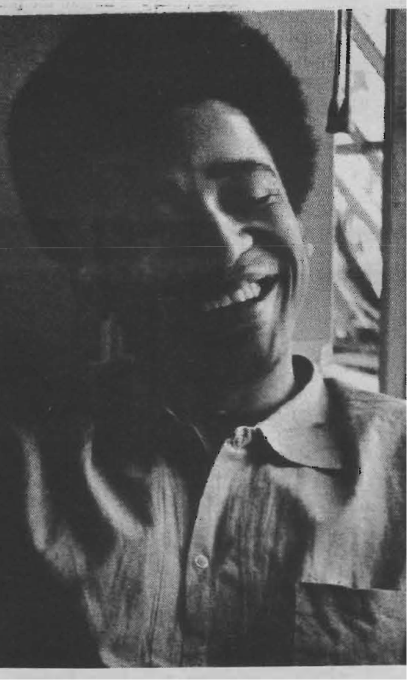
The commemoration of Black August started in the late 1970s, when inmates at San Quentin Penitentiary in California organized the first commemoration to honor their former comrades who had given everything for the struggle.
In 1961, 19-year-old George Jackson was convicted by the California prison system for the crime of robbing a gas station for $71. He would spend the rest of his life behind bars, where he would join the Black Panthers and become one of the most important revolutionaries in the US prison movement. George was given the sentence of “a year to life” for his offense, meaning the judges and prison officials could dangle his freedom in front of him in a cruel attempt to get George to submit to their authority (again, for the crime of stealing $71). Even though he initially went to prison as an “everyday lawbreaker,” it was his political consciousness and activity that kept him incarcerated for 11 years. George was introduced to the politics of revolution while inside, reading about the US invasion of Vietnam and the works of Karl Marx, Vladimir Lenin, and Mao Zedong. He was encouraged to study revolutionary texts, write about his struggle, and organize other prisoners to join the fight against capitalism and white supremacy. George joined the Black Panther Party (BPP) from inside prison and was tasked with establishing more BPP chapters inside the California prison system (a task he would not live long enough to fulfill). He published two books while inside, Soledad Brother and Blood In My Eye, two foundational texts of ongoing importance for the US prison movement. George’s name would become more widely known as he became one of the Soledad Brother defendants, a group of Black prisoners accused of killing a guard in Soledad State Prison after three Black prisoners were shot and killed by a prison guard.
During the trials of the Soledad Brothers, an intense struggle ensued. It became clear the Soledad Brothers, particularly George, were being targeted for their political activism as there was no evidence they had committed the crime. Revolutionaries on the outside began building a movement to highlight this political persecution and to free George and the Soledad Brothers. On August 7, 1970, Jonathan Jackson, George’s 17-year-old brother, entered the Marin County Courthouse with guns and demanded the release of the Soledad Brothers. Along with three others, Jonathan attempted to leave with a judge, an attorney, and three jurors as hostages in a van that was waiting for them. Police fired repeatedly into the moving vehicle, killing three Black Panthers, including Jonathan, and the judge. One hostage was paralyzed for life. The lone surviving Black Panther, Ruchell Magee, would go on to spend nearly six decades in prison for his participation in the deadly escape attempt. Writing about his brother in the pages of Soledad Brother, George wrote: “Little Jonathan Jackson knew what he was doing. He was a revolutionary. He gave his life in the struggle, and I will never forget that…. They killed my little brother, but they can’t kill his ideas. He was only 17, but he understood more about this system than most people learn in a lifetime.”
Nearly a year later, on August 21, 1971, George was killed at the hands of prison guards during an attempted prison break, though there are many questions to this day about the circumstances surrounding George’s death. Many believe he was set up and murdered by prison guards. After George’s death, the group he helped form behind the prison walls would go on to organize struggles on the inside. Revolutionary prisoner and George’s comrade, Khatari Gaulden, died on August 1, 1978, from prison medical neglect. It was after this that George’s closest comrades began to commemorate the Jackson brothers, Gaulden, and the struggle of Black people during the month of August, spreading this commemoration across the US.
From then on, the commemoration of Black August has taken on many different forms and new meanings to those who participate in it. Though its significance has faded from many people’s collective memory, it’s still commemorated widely by revolutionaries, nationalists, and prisoners alike. For those who observe BA, it’s a time to recommit oneself to the struggle. Traditionally people fast, limit media intake, emphasize cultural and political studies, and wear a black armband.
Additionally, there are special days of commemoration during BA—days that mark the historic events of struggle, such as August 7th and August 21st to mark the deaths of Jonathan and George.
This Black August, The Spark calls on all people inside the jails and prisons and their loved ones outside to participate in this year’s Black August commemoration by committing to the struggle against oppression and joining us for building the August 21st national day of protest against the mass incarceration machine: George Jackson Day (GJD). Take the month to make plans for GJD and how prisoners can hold demonstrations and actions inside, in coordination with supporters and families demonstrating outside the walls on the same day. Spread the word to your loved ones or solid organizations speaking up for prisoners, and have them answer the call to organize protests on the 21st. Invite other inmates to participate in a Black August program focused on self-discipline and collective struggle, discuss its history and politics (we can get you some books for discussion groups), organize a collective act of discipline (fasting from sunrise to sunset, collective workouts during August), and organize an action against mass incarceration, conditions, and mistreatment on August 21st. Make signs and banners from sheets with slogans about the jail or prison and the struggle against it, invite people to gather at a specific time and location in your division or deck, and ask people to make speeches and lead chants. Get creative. Spread the word on your deck: it’s time to come together and struggle, collectively. Most importantly, write to The Spark about your experience during Black August—how you and others practiced it—and report to us on your demonstration if you organized or participated in one (what was the program, how many people came out or participated, what was the reaction of the guards and other inmates, etc.).This Black August, The Spark calls on all people inside the jails and prisons and their loved ones outside to participate in this year’s Black August commemoration by committing to the struggle against oppression and joining us for building the August 21st national day of protest against the mass incarceration machine: George Jackson Day (GJD). Take the month to make plans for GJD and how prisoners can hold demonstrations and actions inside, in coordination with supporters and families demonstrating outside the walls on the same day. Spread the word to your loved ones or solid organizations speaking up for prisoners, and have them answer the call to organize protests on the 21st. Invite other inmates to participate in a Black August program focused on self-discipline and collective struggle, discuss its history and politics (we can get you some books for discussion groups), organize a collective act of discipline (fasting from sunrise to sunset, collective workouts during August), and organize an action against mass incarceration, conditions, and mistreatment on August 21st. Make signs and banners from sheets with slogans about the jail or prison and the struggle against it, invite people to gather at a specific time and location in your division or deck, and ask people to make speeches and lead chants. Get creative. Spread the word on your deck: it’s time to come together and struggle, collectively. Most importantly, write to The Spark about your experience during Black August—how you and others practiced it—and report to us on your demonstration if you organized or participated in one (what was the program, how many people came out or participated, what was the reaction of the guards and other inmates, etc.).
Let’s make this year’s Black August the time to transform into committed revolutionaries, get people involved in a common struggle, and reignite the prison movement. Get organized for George Jackson Day on August 21st. As George Jackson wrote:


What happened to Attica?
This article was originally featured in the June 2025 issue of Cracks at Hotel California and written for an audience inside the Cook County Jail, Chicago, IL with a few additions and edits made for The Spark.
Over the last two years, Cracks has been organizing inside and outside Cook County Jail (CCJ), talking with prisoners and their loved ones about the horrors behind its walls. The conditions people are forced to endure are deplorable. There’s food and water that make inmates sick, scalding hot showers, mold-infested toilets, and freezing temperatures in the night time. Mice, rats, and roaches run rampant through the cells in nearly every division. And the list goes on. This alone would drive any normal person to the brink of insanity. But to make matters worse, if inmates wanted to try to distract themselves from this reality through any kind of mental stimulation, most are often only provided limited access to the law library. Classes and programs are considered a privilege only for a select few out of the 5,000-plus inmates, who are paraded in front of the news cameras and become the face of CCJ when politicians and higher-ups come in for a tour. For the vast majority of inmates, their days inside CCJ are spent doing nothing at all. Pictures of loved ones, drawings inmates make for things like art therapy, and books sent in from the outside are often confiscated. Inmates are often shackled like slaves for no justifiable reason.
On top of these conditions there’s the rampant, unchecked mistreatment and abuse from the guards. Prisoners are verbally abused by guards trying to act tough on the daily. Guards punish them in a whole host of ways, denying “privileges” like visitations, phone calls, and using the microwave. They throw prisoners into segregation or the hole for nothing, while the head of the jail, Tom Dart, tells the world CCJ doesn’t have solitary confinement. If guards can’t get their licks in on a prisoner that pissed them off, they can throw them in a cell with their opps or bribe other prisoners to attack them. Guards regularly get away with physical assault and sexual abuse of prisoners.
Every day is a humiliation ritual for those inside. Men and women can spend years living with this reality, while they wait and wait for their day in court. As the jail tries to break prisoners mentally, the mental health they offer is a joke—if they even get access to it or are believed by guards when they say they need help. Prisoners’ medical needs are often ignored or neglected, leaving inmates with injuries or infections to worsen, or for them to succumb to medical problems and die. One of the most brazen examples of this systematic neglect was during COVID, when CCJ was named the country’s “top hot spot” in the pandemic. Overcrowded decks, negligence in sanitation, and slow distribution of masks led to the virus spreading like wildfire, killing 10 prisoners and two guards and infecting hundreds from 2020-21. When you step back from the immediate situation and look at the things from afar, it becomes clear as day who the oppressed are and what the oppressive system is. Yet, prisoners will all too often turn on each other instead, bringing in beef they have on the street with another prisoner, picking fights over petty shit, parasitically extorting their fellow inmates, and at worst: raping, torturing, or killing one another.
So what are we going to do about this? People inside live the above reality, a hell on Earth, not just in Cook County Jail but around the country. Their loved ones on the outside hear the stories and worry about them constantly, not knowing if they will live to see another day while trapped inside the prisons and jails. What’s stopping people, the millions who are negatively impacted by mass incarceration, from coming together and figuring out how to fight back?
Many people in the US have been conditioned to have faith in the system. Many still remain hopeful that politicians will suddenly care about the plight of inmates in the jail, or that appeals to elected officials’ consciences will change their minds. There’s also the fear of reprisal and guards coming after prisoners and their families in retaliation for speaking out. But mainly, there is a deep-seated nihilism that holds people back: the idea that there is no point in struggling and striving because nothing ever changes. This thinking is exactly what the prison and jail authorities, the politicians, and the people at the top of society want us to believe. They train people in this type of thinking to keep people dependent on their system and from getting out of line. Part of how they have engrained this thinking is stripping them of any historical memory of people standing up to oppression, radical alternatives, and prisoners standing up to mass incarceration and conditions they suffer. The fact is, there is a rich history in the US of prisoners taking a stand, fighting back against oppression and injustice, and forcing the system to concede to their demands through radical and revolutionary struggle. Through difficult circumstances, prisoners were not only able to make significant changes in the jails and prisons, but also transformed themselves in the process, from a criminal mentality to a revolutionary mentality: committing their lives to the liberation of humanity as a whole and fighting for a world free of oppression and exploitation.

There’s a hidden history of prison struggles going back to the Nation of Islam (NOI) in the 60’s. From its inception in the 1930’s, the Nation saw the prisons and jails as an arena of political struggle. Coinciding with the Great Migration, when masses of Black people moved to urban centers in the North fleeing the Jim Crow South, police, prisons, and jails became the main tools of oppression against Black and other oppressed people. The Nation quickly identified this systemic oppression, and its members inside the prisons began organizing themselves. As the prison populations grew, so did the Nation’s membership and influence inside the prisons (Malcolm X was recruited while in prison by his brother, where he then met other NOI inmates and began his transformation from a petty criminal to a revolutionary activist for the NOI). Muslim inmates faced discrimination from prison authorities in a number of ways, such as prohibiting prayer, banning religious texts, and neglecting to serve halal meals (the religious diet of Muslims). The NOI took up fights against these discriminatory practices through acts of resistance, including hunger strikes, sit-ins, disruptions of solitary confinement, and litigation against prison officials.
Not only did they fight for the Black Muslim inmates, but also forced the hand of prison authorities to allow inmates to get access to legal texts (if you use the law library, you can thank the NOI for that), recognize and respect the rights of prisoner organizations, create educational opportunities and programs for inmates, and address poor living conditions. Organization on the outside allowed for the NOI to publicize these struggles to a wider audience among the masses of Black people through their newspaper Muhammad Speaks, exposing both the realities of prisons and jails and the struggles against them. NOI members left the prisons to become activists in the streets like Malcolm, transforming themselves behind the prison walls and leaving any kind of criminal life they may have had in the past. Despite the Nation’s conservatism—often holding back and restricting the Black liberation movement from embracing revolutionary politics, their reactionary views on women and homosexuality, and their embrace of Black capitalism, to name a few—prisoners today can learn a lot from how basic, defiant organization, outside of the control of the prison establishment, leveraging a variety of tactics, and with an orientation towards prisoners, can fight and win basic demands of the prisoners and their families.
Attica Means Fight Back!
In the 1960s-70s, the population in jails and prisons began to explode. Aggressive policing of Black and Latino neighborhoods in the cities, coupled with unemployment, the growing drug economy, and continued racist discrimination, threw thousands of young people into the prison system. New revolutionary organizations, inspired by Malcolm’s example, had emerged, such as the Black Panther Party (BPP) and Young Lords Organization (YLO), a Puerto Rican revolutionary organization. The politics of these groups influenced the great mass of prisoners inside, with the BPP attempting to establish its own prison chapters. At this time, prisoners across the board were more organized, whether it be on lines of religion, nationality, or ideology. In some instances, this would lead to conflict among prisoners, with prison organizations operating more like gangs beefing with one another.
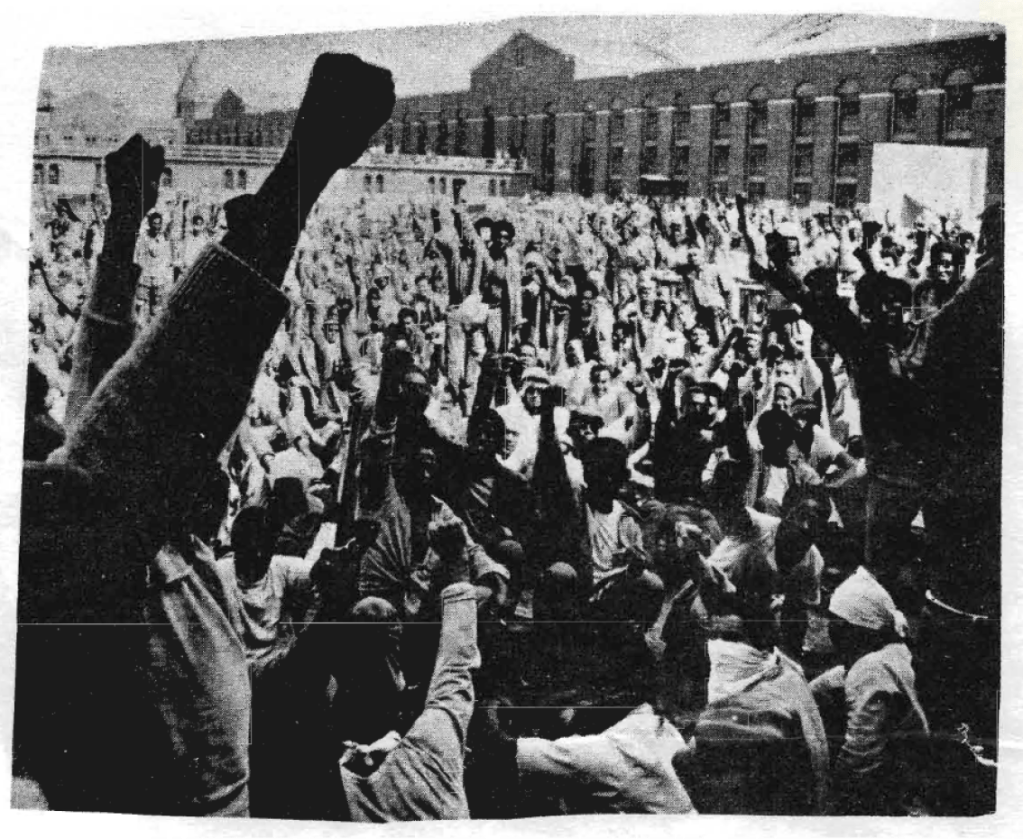
In 1971, prisoners in the Attica State Prison in upstate New York rose up against the prison authorities, their poor living conditions, and repression of their political rights and politics, exposing to the world how prisoners in the US were being “treated like beasts.” On September 9, 1971, 1,281 of the approximately 2,200 men rebelled against the prison authorities, taking control of the prison, and holding 42 staff members hostage. During the four days of negotiations, authorities agreed to 28 of the prisoners’ demands but refused to fire the warden and grant amnesty for those engaged in the prison takeover. The governor of New York, Nelson Rockefeller, refused to meet with inmates at their request, and instead ordered armed officers to invade the prison at the advice of President Richard Nixon, massacring 10 correctional officers and 29 inmates in the process.
There are plenty of lessons we can learn from the Attica rebellion, the first being the role of the political consciousness of the prisoners. The rebellion occurred during a time of intense political struggle across the US (and world) against the Vietnam War and racism at home. Oppressed people in the US were inspired by worldwide anti-colonial revolutions happening at that time. From 1949-1976, the People’s Republic of China, under the leadership of Mao Zedong, showed the world oppressed people could not only make revolution through seizing state power, but continue to revolutionize society through the Great Proletarian Cultural Revolution, re-energizing and inspiring people’s ideas about liberation and socialism (to learn more about this period, read the book Continuing the Revolution After the Revolution: Socialist China, 1949–1976, and write to us if you want to get a copy). Oppressed people were identifying with the Vietnamese and other struggles around the globe against colonialism and imperialism, the most powerful military in the world (the US) could be defeated by a much smaller, less technologically advanced people fighting for liberation. Prisoners leading the uprising at Attica were steeped in this political climate and were organized along these political lines, having drawn up demands and engaging in political protest inside the prison prior to the rebellion. Additionally, the conditions of life in Attica were worsening. The prison, only built for 1,200 inmates, had reached a total of 2,243 by the time the rebellion had popped off, with inmates living on top of one another. In describing the conditions of life, historian Howard Zinn wrote, “Prisoners spent 14 to 16 hours a day in their cells, their mail was read, their reading material restricted, their visits from families conducted through a mesh screen, their medical care disgraceful, their parole system inequitable, racism everywhere.” All of this and more led inmates to revolt. So on that September day, when some inmates had an argument with a guard and reinforments later came to throw two of them into solitary, other inmates resisted and began the takeover.
We remember Attica today because of the courage of the prisoners standing up against oppression and for the people’s liberation. The rebellion shined a spotlight on the growing mass incarceration machine, its role in society to contain oppressed people who threaten the system, and the brutal conditions prisoners in the US face. During the uprising, inmates spoke out on live TV about the torture at the hands of guards, inhumane living conditions, and brutal treatment of inmates by both the prison and legal system. Attica sparked more rebellions elsewhere and a national movement of people on the outside to take up the cause of prisoners. It put the prison struggle on the map for the whole world to see. Not only did it force the system to make substantial changes to the treatment of prisoners and general prison conditions, but also to make changes to things like parole. And while the rebellion was violently put down, those inmates took a bold stand and made the ultimate sacrifice that inspired millions in the decades to come. Today, Attica holds a special place in the hearts of the oppressed across the globe.
The SHU and Pelican Bay
The prison movement made both advances and retreats in the years following Attica. While the system was forced to make changes that respected the rights of inmates, it also took precautionary measures to try and prevent inmates from again becoming a force they had to reckon with. In the 1980s, California prison authorities began to massively expand their prison system. The so-called War on Drugs launched in the 70s-80s, creating an explosion in the prison population across the US, with Black and Latino men targeted in police arrests and hit with long sentences for non-violent drug offenses. In response to the growing prison movement and periodic uprisings, California’s state government enacted and maintained policies of dividing and segregating inmates by race, leading to stoked racial tensions inside the prisons. But increasingly, authorities began to use solitary confinement as a means to keep inmates divided.
In 1989, California opened the Pelican Bay State Prison, a so-called state of the art prison with a new kind of indefinite solitary wing known as the Security Housing Unit, or SHU. The SHU was designed to hold prisoners who were determined by authorities to be members of “prison gangs” and who posed an “internal security threat” to the prison authorities. These prisoners would be removed from the general population and placed in solitary for the remainder of their sentences, many in solitary for decades. Black prisoners caught reading books like Soledad Brother or Blood In My Eye , or Latinos and Chicanos found with drawings or symbols of Aztec warriors, would be classified as internal threats, transferred to Pelican Bay, and placed in the SHU. Thousands of prisoners not only suffered from the decrepit conditions and abuse, but also the psychological torture of the SHU, having no human contact for years besides guards who would move, restrain, or beat them. Visitors couldn’t even be in the same room. Usually having to drive hours to see their loved ones inside, families could only talk through glass to prisoners for their one-hour visit, once a month.
Despite their solitary confinement, prisoners in the SHU devised ways to communicate with one another, through coded messages and passing small handwritten notes between cells. After some years of planning, prisoners in the SHU managed to organize a hunger strike in 2011, demanding an end to their indefinite solitary confinement, and another strike in 2013. Inspired by the 1981 Irish Republican Army (IRA) hunger strikers who fought inside British prisons against conditions and violations of their rights, SHU inmates saw the tactic of a hunger strike as a way to not only bring prison authorities to meet demands, but also to get more public attention on the struggle of prisoners. News of the strike spread, and inmates in other prisons began to join in, adding demands like clean facilities, better food, and better access to books. At its peak, some 30,000 prisoners across the state of California joined the 2013 hunger strike, which lasted about two months with different levels of engagement. The strike gained national attention and put a spotlight on California’s use of solitary confinement and its poor prison conditions. The California strike inspired others to take up the struggle even after it had ended. In 2014, over 1,000 immigrants, detained by US Immigration & Customs Enforcement (ICE) at the notorious Northwest Detention Center in Tacoma, Washington, went on a hunger strike for 56 days to protest their confinement and the horrific conditions in the facility, exposing people to the struggle of migrants captured by ICE who were forced into the same conditions as inmates in the jails and prisons. In 2015, due to the struggle of prisoners, California was forced to terminate indefinite solitary confinement and greatly reduced the number of individuals in solitary as a whole.
While horrific conditions inside California jails and prisons persist, the hunger strike dealt a blow to the system and forced it to concede to inmates’ demands. Even under the harrowing and nearly impossible conditions of solitary, inmates were still able to organize themselves to fight back. Prisoners in Pelican Bay, who would normally be considered enemies, got together to draft an “Agreement to End Hostilities” document stating inmates would not fight each other. An outside support network helped spread the word to other prisons and raise the demand of prisoners in the streets. This kind of coordinated inside-outside strategy built a broad movement among different sections of society, a movement much needed and severely lacking today.
The Struggle Continues
There are plenty of other great examples of developments and tactics in the prison movement in recent history, and in the last decade, we can look to and learn from, much of which we’ve had to condense. In 2016, the Free Alabama Movement (FAM), an organization of prisoners and supporters organizing in the Alabama Department of Corrections, organized a coordinated prison work strike that involved an estimated 24,000 prisoners in 24 states, the largest prison strike in U.S. history. The strike dealt an impressive blow to the state of Alabama, heavily reliant on the slave labor of prisoners, as well as exposed the inhumane conditions and mistreatment inside the prison system to a national audience. In 2020 and 2021, during the height of the COVID-19 pandemic, inmates inside the St. Louis City Justice Center (CJC) staged multiple protests against conditions inside the jail. When their demands weren’t met and their peaceful protest was physically put down by guards, their tactics escalated, again pushing to the national stage the medical neglect and deteriorating conditions prisoners face, especially during the pandemic. As one rebel inmate wrote during the time:
“In the early hours of the 6th, inmates broke several windows on an upper floor. They chanted and held signs. Several things were also set on fire and thrown out of the windows. Chairs and other items littered the street below the windows, and at least one car had a shattered windshield. Sometime in the early morning the inmates at the St. Louis Justice Center staged an act of civil disobedience because of the inhumane treatment by CJC Management concerning Covid-19 along with other issues. Expo-Stl was made aware that more than 50 inmates participated in a peaceful protest that took place on December 29th. Nothing was done to address those issues and this mornings uprising was the natural evolution of the actions of living and feeling human beings. Here now is a communications from inside the Justice Center itself.”
In the Winter of 2025, prisoners inside New York state prisons stood up and rebelled against conditions across the state, requiring the National Guard to be called in to stop the unrest. These rebellions were mostly spontaneous reactions to the conditions inside and didn’t raise a coherent list of demands or have much outside support. What is required is the kind of organization that can lead both prisoners and people outside to challenge the conditions and mistreatment prisoners face.
In a more recent act of resistance, in May 2026, the whole world heard the cries of the Delaney Hall hunger strikers, demonstrating how immigrants are not passive victims, but a leading force in changing the situation right before us. As of this writing at the end of June, immigrants detained in at least four detention centers are on active hunger strike (Delaney Hall, NJ; Torrance County, NM; Prairieland, TX; Adelanto, CA). A month prior, immigrants kidnapped and held at Moshanna Valley Processing Center, PA and North Lake Processing Center, MI also went on hunger strike, with protests following. And these are only the ones that started in the past two months. Resistance has spread, led by immigrants subjected to the death camps around the country where detainees continue to die under mysterious circumstances at a growing rate, who are demanding the full closure of all ICE detention centers. This is the direction the fight against both ICE and the prisons and jails needs to go, and their ongoing resistance can fuel ours if we seize the time, stand with the strikers, and join them in struggle.
All of the above examples are continuations of the prison movement in the US. Organizations come and go, capitulate, and can be sabotaged by the enemy. Prisoners who stand up and speak out can be retaliated against. Some step forward, brave the storm, and win the battle in the ongoing war. These are the realities of the struggle to change the world and fight oppression. But one thing remains certain: no one besides the masses of people will make the kind of change we need. Prisoners in the aforementioned examples were never begging for changes to be made. They organized to fight against the prison authorities and the conditions they imposed.
Today, we are sorely lacking the kind of national organization required to deal a real blow to the mass incarceration machine, but in many jails and prisons across the country, there lies seeds of resistance that can begin to grow and flourish. If prisoners and their families are ready to put an end to the misery, an organized prison movement on revolutionary lines is what it will take. The Spark has ideas about what this could look like and wants to correspond with prisoners about their thoughts, ideas, and strategies on this matter to make this a reality.
From the criminal to the revolutionary mentality
One of the biggest obstacles in the way of building the kind of prison movement in the US able to bring the system to its knees is the pervasive criminal mentality fostered by the capitalist society and the mass incarceration machine itself. Prisoners must transform themselves and commit to the struggle, study revolutionary history and theory, and make sacrifices big and small. Whatever prisoners did or didn’t do on the outside, everyone inside is encouraged to act and think like a criminal. Desperate conditions force prisoners to turn on each other, rob, steal, and extort one another. For oppressed people, the entire system encourages and fosters a criminal mentality, a “get mine,” “me first,” dog-eat-dog world (read more in “Crashing Out: Where Does Crime Come From?” from Going Against The Tide; write to us to get a copy). This mentality has first got to change and be combatted within ourselves and each other if prisoners are serious about the cause, and it can only start to change through an intense personal struggle with oneself.
Before Malcolm became Malcolm X, he was a petty criminal who stole, robbed, pimped, and sold drugs, going by the name of Detroit Red. It was during a stint in prison where Malcolm was recruited into the NOI and began the process of deep, personal, and political change, transforming himself from Detroit Red to Malcolm X, who left the prison and would become a revolutionary leader that shook the system to its core. In 1968, a young Puerto Rican gang leader named Jose “Cha Cha” Jimenez entered Cook County Jail for a 60-day stay for possession of heroin. During this time, Cha Cha began to read revolutionary literature and decided he would dedicate himself to fighting oppression. While inside, Cha Cha stood up for other inmates, helped translate for Spanish-speaking inmates inside, and educated inmates on their rights. Cha Cha left CCJ and would go on to turn his street gang into a revolutionary organization called the Young Lords Organization. He continued to fight against oppression until his passing at the beginning of this year.
In 1980, the Peruvian Communist Party (PCP) (aka Sendero Luminoso, or the Shining Path) initiated a revolutionary people’s war to overthrow their oppressive, fascistic, US-backed government. During this struggle, many revolutionaries were captured and thrown into Peru’s prisons and jails. But instead of viewing capture as simple defeat, the PCP viewed imprisonment as a new opportunity to wage struggle, referring to the prisons and jails as “shining trenches of combat,” Within five years, the PCP had extensive controlled of the country’s prisons and jails. Peruvian society was turned upside down by the people’s war, and revolutionaries who organized prisoners were recruiting more into the party, replacing the government authority in the prisons with the revolutionary order of the prisoners, and leading coordinated resistance behind the walls. While the US prison movement today is in a much different position than the militants in Peru during the revolution, the Peruvian experience is worth further study and recognition of what’s possible when prisoners have organization, guided by revolutionary politics.
Historically, organizers in the prison movement in the US have referred to jails and prisons as “universities,” not in the narrow sense that many people can get a degree or learn a trade while doing time, but that incarceration clears the ground for changing someone’s entire worldview. This kind of transformation is not just personal, it’s political, and one where people are not only transforming themselves, but the people around them. Beginning to fight not just for their own dignity and self-worth, but for the dignity of all people oppressed by this system.
While some transform doing time, many become hardened by the realities of prison life. And not all transformation is positive, either. For example, many people become “born again” while inside, and advocate for only self-improvement and prayer in the face of systemic injustice that requires collective struggle (like the examples above). This is not a knock on religion, but instead a recognition that not all change of conciousness can lead to changing society. Only learning, studying, and applying revolutionary ideas can push the movement forward and carry it through to it’s necessary conclusion: power in the hands of the oppressed masses of people.
Prisoners have differences and problems with one another, both real and petty. But there’s a common struggle to be had against the people who have captured you, the people who serve you shit food, the people who humiliate you, the people who neglect you, beat you, and set you up. We remember Attica. Attica means fight back.

The Specter That Still Haunts, Part 4: Picking the Ripest Fruit for Harvesting a Revolutionary People
by Kenny Lake
The following is the fourth section of the Specter That Still Haunts, Locating a Revolutionary Class Within Contemporary Capitalism-Imperialism by Kenny Lake. The Full series is available in a reprint from Going Against the Tide. If you would like copies of the full Specter series, please write to us at the PO Box provided in this newsletter or email smallaxebooks@protonmail.com.
Having laid a theoretical foundation for understanding the proletariat as a concept in Part 1, drawn a broad outline of changes in the capitalist-imperialist system in Part 2, and extracted lessons from the successes in forging a revolutionary people in recent communist people’s wars in Part 3, here we turn our attention to understanding who constitutes the proletariat in the United States and especially its most potentially revolutionary sections. Given the lack of any real communist pole in the US (and in most of the world), it will be crucial for those seeking to build communist organization to do so by picking the ripest fruit for harvesting a revolutionary people. Since, as argued throughout this series, it is in the processes of dispossession and proletarianization and in the social antagonisms created by the anarchic movements of capital that those most prone to revolutionary possibilities can be found, communist practice requires a keen analysis of just who those people are to be most effective.
As such, what follows will zero in on the processes that generate such proletarians in the US rather than attempt to make an overarching class analysis of US society. Moreover, many particularities will be left out in favor of identifying broader processes effecting virtually the entire US. Any practical efforts to organize these proletarians in revolutionary struggle will ultimately require delving into how these processes manifest themselves in different geographical locations, as well as dealing with other processes not addressed here. Furthermore, since there are limits to what can be said about concrete methods of organizing in a published essay, strategic and tactical proposals will be kept to a minimum, though much can be implied from the analysis. Finally, the processes of class formation and class antagonisms below have been identified and analyzed in various ways by others, and thus what follows is nothing profoundly new. What is different here is subjecting these processes to class analysis and seeking out the potential they hold for forging a revolutionary people—which even the best of radical petty-bourgeois thinkers will never be capable of.
One last qualification is required before moving on. In What Is To Be Done?, Lenin argued that communists need to carry out political work among all class strata in order to build the necessary alliances to be in a position to seize power and carry out the socialist transition to communism. Moreover, he advocated that communists speak to all the political, economic, social, scientific, and cultural questions in society rather than just the immediate concerns of the proletariat. But within this broad-minded, thoroughly communist, and strategically accurate polemic, Lenin also stated:
In the earlier period, indeed, we had astonishingly few forces, and it was perfectly natural and legitimate then to devote ourselves exclusively to activities among the [proletariat] and to condemn severely any deviation from this course. The entire task then was to consolidate our position in the [proletariat].1
Without taking this statement as absolute, it is fair to say that any communist formation that does not make building roots among our social base its first concern and prime order of practical importance is not on the revolutionary road.
To Capital, Black Lives Don’t Matter
White supremacy has long been the main social glue that holds the US together as a social formation. Since the genocide of the Indigenous population and the rise of slavery, this has principally revolved around the oppression of Black people. The social glue of white supremacy, however, is a unity of opposites in that it is a highly toxic adhesive capable of bursting into flames, as history has repeatedly demonstrated. And while white supremacy and the oppression of Black people cannot be reduced to a question of class formation and class antagonism, it has been and remains integrally linked with the class structure of the US.2
As Löic Wacquant points out, earlier systems of white supremacy revolved around the control of the labor of Black people and had, as their ongoing objective and foundational motivation, the extraction of surplus value through exploitation of that labor. Slavery and then Jim Crow enforced such exploitation in the agricultural economy of the South all the way to the 1960s. The Great Migration beginning around World War I saw ultimately millions of Black people make their way from the South to cities, especially in the Northeast and Midwest, over the course of several decades both to escape the violence and terror of Jim Crow and because capital was in need of labor in its growing industrial centers. This resulted in the proletarianization of many Black migrants from the South in the lowest rungs of the class structure, as well as in new forms to control and repress these Black proletariatians: the segregated ghettos lining city centers and police terror replacing the Klan terror of the South.3
But beginning in the 1970s, Capital no longer needed this population to labor in its factories. With the internationalization of production and the more profitable possibilities for locating production and exploiting the proletariat in the oppressed nations, a wave of deindustrialization swept the US, especially in the industrial cores of the Midwest and Northeast. As sociologist William Julius Wilson summarizes, “in the twenty-year period from 1967 to 1987, Philadelphia lost 64 percent of its manufacturing jobs; Chicago lost 60 percent; New York City, 58 percent; Detroit, 51 percent.”4 The anarchic motion of capital from the old manufacturing belts of the US to the new export processing zones of the oppressed nations thus cohered a new segment of the proletariat in the former: an industrial reserve army of unemployed.
Given how central the oppression of Black people is in the US to maintaining bourgeois hegemony by always giving white people, even white proletarians, a position over and above Black people and Black proletarians in particular, it is no surprise that Black proletarians disproportionately bore the brunt of this deindustrialization. While in 1970 70% of Black people “working in metropolitan areas held blue-collar jobs,” by 1987 “the industrial employment of [B]lack men had plummeted to 28 percent.”5 Many of the new manufacturing jobs created in recent decades were located in the suburbs, which meant those trapped in inner-city ghettos who could not afford a car were hard-pressed to find and keep such jobs.6 In those sectors of the economy where new jobs did emerge, such as services and finance, Black proletarians and the young men among them in particular were effectively locked out through a combination of discrimination by employers and the failure of the education system to provide training.7 The results of systematic discrimination can be seen in the fact that while in 1954 the Black and white unemployment rates were more or less equal, by 1984 “the [B]lack unemployment rate had nearly quadrupled, while the white rate had increased only marginally.”8 Even during “the much heralded economic boom of the 1990s, the true jobless rate among noncollege [B]lack men was a staggering 42 percent (65 percent among [B]lack male dropouts).”9
The result of all this is that over the last several decades, a large segment of especially though not only Black proletarians have become a more or less permanent industrial reserve army of unemployed.10 Since the factories are not coming back and capital and the bourgeois state have done nothing to provide employment for this population, with crime and the drug trade the only exception, there is virtually no hope among them for stable and legal employment. From the beginnings of industrial capitalism in England, surplus populations have been an inherent necessity to capital’s functioning—keeping employed proletarians in their place with the threat of their replacement and providing potential laborers for periodic rapid expansions in the accumulation and production processes. But these surplus populations, being desperate for means of subsistence, have also been an inherent instability for the rule of capital—posing an insurgent threat, even if often in the form of “criminal” activity to meet their subsistence. Moreover, since surplus populations are likely to roam in search of employment, the bourgeoisie must also put restrictions on their mobility if it wants to keep them around for when it may find their labor useful again.11
The creation of a permanent surplus population made up especially of Black proletarians in the urban ghettos began exactly at the same time as Jim Crow and the older structures used to maintain the oppression of Black people were coming to end, in large part due to the Civil Rights and Black liberation struggles. As has happened and will continue to happen until proletarian revolution occurs in the US, when the old structures of white supremacy were dismantled, new ones arose to take their place and the majority of white people were enlisted to give their consent and support to these new structures. And it is no coincidence that the new structure—mass incarceration—met the needs both of controlling the new surplus population and providing an officially colorblind form of white supremacy after open racism became more difficult to publicly proclaim following the 1960s.
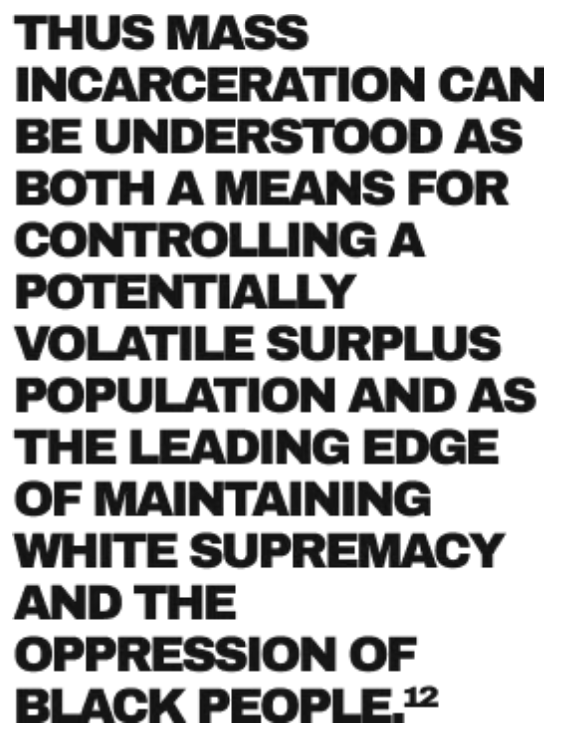
What makes it occupy such a central role in both regards is its sheer magnitude, the fact that the entire ruling class and its state apparatus has been united behind it as policy and practice, and the way in which the hegemony of the ruling class has been fortified through building consensus with and active participation by white Americans in the mass incarceration of Black people.
A few statistics begin to explain the sheer magnitude of mass incarceration. From 1980 to 2000, the total number of people in jail or prison went from 300 thousand to well over two million, and has remained above that number since then. In 2008, there were 5.1 million people on probation or parole. That over one million Black men are in prisons or jails and, in 2006, one in fourteen Black men were imprisoned as compared to one in 106 whites are telling indications of how mass incarceration is the new form for the oppression of Black people.13 Aside from these statistics, the sheer magnitude of mass incarceration is also expressed in how it permeates so many aspects of daily life for the communities affected, from daily harassment, violence, and arrests by the police, to the regular humiliations and powerlessness faced in a court system stacked against Black people, to navigation of the prison system by families separated by its walls. Moreover, employment discrimination against convicted felons forced to “check the box” indicating their criminal record on job applications has solidified their status in the permanent industrial reserve army.14
Over several decades in which splits and vehement disagreements among the US bourgeoisie have only been growing, its nearly absolute unity on expanding mass incarceration has been striking. This manifested in the electoral battles to prove who was toughest on crime beginning in the late 1960s that reached fever pitch in the 1990s with liberal Democrat Bill Clinton signing off on the execution of a mentally impaired Black man to prove his presidential worthiness. Under the rubric of the War on Drugs initiated by Reagan, each new “tough on crime” law passed through Congress with overwhelming support—the 1988 Anti-Drug Abuse Act, with its 5-year minimum sentences, passed the House of Representatives 346 to 11.15 Clinton’s $30 billion anticrime law, which included handing down life sentences under the “three strikes and you’re out” provision, allocated over $16 billion for “state prisons and the expansion of state and local police forces.”16 The Supreme Court has consistently given its rubber stamp to the practices of the police and court system that corral Black people into prisons, from its consistent rulings eviscerating Fourth Amendment protections against searches and seizures to its blocking of attempts to challenge systematic racism by the justice system.17 Finally, the bourgeois media has given a rather consistent message of support for mass incarceration and the demonization of Black men as a criminal threat.
This latter aspect points to the role of mass incarceration in cementing the hegemony of the bourgeoisie through the incorporation of the vast majority of white people as at best passive supporters of imprisoning Black people on a massive scale and at worst active participants. The public opinion created through the bourgeois media and political sphere constructs passive support, while the 700 thousand prison and jail workers and 2.4 million employees of the justice system18 constitute a direct example of what Gramsci referred to as the subaltern classes brought into the exercise of bourgeois rule. Many of the small towns around prisons depend on those prisons for their economic survival, and thus have a direct material stake in the preservation of mass incarceration. All this dovetailed with an increasing politics of cruelty demonizing Black people and justifying massive cuts to social welfare at the very time when unemployment among ghetto residents soared and the crack epidemic put so many in need of addiction treatment.
As Michelle Alexander rightfully emphasizes, mass incarceration not only imposes itself on those who are incarcerated, but on the entire population rendered superfluous to capital accumulation. This includes the numerous control mechanisms imposed on such communities, from probation and parole to consistent police harassment, brutality, and the creation of criminal records so crucial to sustaining mass incarceration. Furthermore, while Black men have been the main targets of mass incarceration, women who are not incarcerated still deal with its effects, having to raise children, find a means of subsistence, and hold families and communities together that are literally separated by prison bars and the distance of prisons located up to hundreds of miles from the communities the prisoners came from. Thus the number of proletarians in a position of direct antagonism with the structure of mass incarceration stretches well beyond the over seven million in prison, on probation, or on parole.
What makes this section of the proletariat particularly ripe for becoming part of a revolutionary people? First, as argued throughout this four-part essay, dispossession is not only the foundational act for creating the proletariat as a class, but also heightens the potential for proletarian class-consciousness and revolutionary practice due to its dislocating effects. Since proletarians rendered a surplus population by the effects of deindustrialization have been subjected to a second dispossession—the loss of employment in proletarian jobs—they have a greater stake in and more attraction towards revolutionary solutions. Moreover, they confront the rule of capital not principally through its exploitation of labor, but in its anarchic motions that render whole sections of people superfluous, and thus have an immediate stake not just in ending exploitation but in exercising collective mastery over the socialized means of production.
Second, with its dual functioning as social control over a surplus population and as the leading edge of the oppression of Black people, mass incarceration is at the heart of both class antagonisms and the functioning and structure of white supremacy. If the solid core of the necessary broader revolutionary united front is the combination and overlap of the multinational proletariat and the oppressed peoples subjugated by white supremacy, then those affected by mass incarceration embody that solid core. Furthermore, this goes a long way in explaining the sheer brutality and inhumanity of mass incarceration that also makes it an integral site for resistance.
Third, mass incarceration imposes collectivity and discipline (see below for what is intended by this term) on those proletarians subjected to it and thus potentially facilitates revolutionary organization. Practically speaking, prisons place a large number of proletarians in a single space and put them in direct antagonism with and, potentially, collective struggle against their immediate oppressors (prison officials, guards, and the white supremacist prison gangs often allied with them). Among the families and communities of the incarcerated, it holds the potential for facilitating collective organization both as survival strategies (such as busses to visit distant prisons) and struggles that do not rely on the structures of bourgeois rule for redress. The potential for the latter is heightened by the fact that those with incarcerated relatives are virtually powerless as individuals to get their relatives released through the court system or other official channels.
In regards to discipline, the volatility of a permanent surplus population in the ghettos of the US that often has one foot in criminal activity presents both positive possibilities and difficulties for revolutionary organizing. On the former, this surplus population has been most prone to explosions of rebellious and even revolutionary violence, as has been demonstrated recently from Ferguson to Baltimore. On the latter, the instability of daily life, the fact that life could end any day and thus thinking about any future makes little sense, and the negative ideological impact of crime (see Part 2) have made bringing this surplus population into revolutionary organization a considerable difficulty. Huey Newton was entirely analytically correct to point to the semi-lumpen youth in the urban ghettos as a social base for revolution, and the Black Panther Party did indeed make considerable headway organizing these youth.19 But times have changed, and the difficulties of organizing this surplus population have increased considerably given the more widespread nature of the criminal economy and the gangster ideology inculcated in those participating in it. Unfortunately the answer of many revolutionaries has been to romanticize the youth among this surplus population rather than find the practical means to organize them, including the need to make ruptures with gangster ideology to proletarian class-consciousness.
Mass incarceration has imposed a harsh discipline on this surplus population, and the brutality of such discipline must be opposed and defeated. But communists should not fail to recognize some positive side effects for revolutionary organizing. For example, many prisoners “seek out philosophy” while incarcerated, thus making compelling communist theory and analysis potentially more effective. This discipline can also diminish some of the individualism inculcated in those who did participate in the criminal economy. Furthermore, it forces many to start thinking about the future, albeit generally on more individual terms (such as how to find jobs and take care of children). Such thinking about the future could potentially be transferred to collective revolutionary activities.
Here a tactical note is in order. Communist-led initiatives will need to prioritize struggles around those aspects of mass incarceration which curtail political activity and collectivity among the incarcerated. The bourgeoisie is well aware of the potential threat collective political struggle by prisoners poses to its rule, and has thus structured incarceration to limit this possibility. The widespread use of solitary confinement is one salient example, which serves both to break the spirit of those subjected to it and to isolate potential political leaders from the masses. Thus winning some immediate victories through mass struggle that better enable prisoners to organize themselves on the inside, such as ending the use of solitary confinement, would need to be priorities for communists. This will be especially fruitful given that a communist organization worthy of the name will find many of its members going to prison.
Recognizing dispossession as a defining feature of the proletariat and valuing the revolutionary potential of surplus populations of unemployed proletarians just as much as working proletarians analytically justifies viewing prisoners, those on the outside under the control of probation or parole, and all those affected by the regime of mass incarceration as a crucial social base for proletarian revolution in the US. That the regime of mass incarceration is both the leading edge of the oppression of Black people today and capital’s main means of controlling the surplus population created by deindustrialization puts those affected by it at the center of the broader revolutionary united front. And given that the surplus population of mostly Black proletarians is put in direct antagonism with the repressive state apparatus, its grievances cannot be redressed short of revolutionary struggle. For all these reasons, this section of the proletariat must be central to the development of a revolutionary people.
Footnotes:
1 Lenin, What Is To Be Done?, in Selected Works vol. 1 (Moscow: Progress Publishers, 1977), 158. “Working class” has been changed to “proletariat” to reflect the distinction made in Part 1, and I believe this terminology to be consistent in spirit with what Lenin wrote.
2A fuller discussion of the many cultural, social, and other forms that the oppression of Black people takes and how this oppression permeates all class strata among Black people is beyond the scope of this essay. And in order to avoid the analytical question of what constitutes an oppressed nation, in part because the particularities of social formation are more important than the definitions they fit into, the general term oppressed people is used throughout this essay.
3Löic Wacquant, “The New ‘Peculiar Institution’: On the Prison as Surrogate Ghetto,” Theoretical Criminology 4, no. 3 (2000): 377–89. Also see Karen E. Fields and Barbara J. Fields, Racecraft: The Soul of Inequality in American Life (New York: Verso, 2014), ch. 4 for a historically substantiated argument that the exploitation of Black slave labor served as the foundation for racist ideology in the United States rather than the other way around.
4William Julius Wilson, When Work Disappears: The World of the New Urban Poor (New York: Vintage Books, 1997), 29–30.
5Michelle Alexander, The New Jim Crow (New York: The New Press, 2011), 50–51.
6Wilson, 37–41; Alexander, 51.
7See Wilson, ch. 5 for a statistical study of employment discrimination.
8Alexander, 218.
9Ibid., 229.
10While Black proletarians are the principal element of this surplus population, it includes many other demographics that have resided in urban ghettos for several decades, including Latinos, Native Americans, and some whites.
11For an excellent discussion of capitalism’s limits on the mobility of labor and surplus populations in particular, see David Harvey, The Limits to Capital (New York: Verso, 2006), 380–85.
12This analytical framework differs from those which label mass incarceration as the “prison-industrial complex” and thus imply or openly argue that the prime motivation for the increased prison population is to exploit (Black) labor. The error of such analysis is to focus narrowly on the question of exploitation in the labor process as the only or main form that the contradiction between the bourgeoisie and the proletariat takes and to fail to understand how crucial industrial reserve armies—unemployed proletarians—are for capitalism’s functioning. Of course it is also true that private contractors have increasingly used prisons as profit mechanisms, whether through building or running prisons, providing paid services to prisons, or using prison labor, but this is more a matter of joining in to a process already underway. Marx, far from being a narrow reductionist, explained that causes become effects and effects become causes, and it is in this sense that the “prison-industrial complex” adds further fuel to mass incarceration.
13Alexander, 60, 94, 100, 179.
14See Alexander, ch. 4, for an exposition of employment and other discrimination against felons.
15Alexander, 53–54.
16Ibid., 56.
17Ibid., 61–69; 106–39.
18Ibid., 230.
19See Joshua Bloom and Waldo Martin, Black Against Empire: The History and Politics of the Black Panther Party (Berkeley and Los Angeles: University of California Press, 2013), 66–73 for an exposition of Huey Newton’s analysis of the social position of Black ghetto residents and Black people more generally and their potential for revolutionary struggle.
We Want To Hear From You
The Spark is written and distributed by committed revolutionaries in the US who are fighting to put revolution on the map in this country. We have sent this newsletter to prisoners around the country and hope you value its contents. If you would like to start a correspondence, please write us your thoughts, any questions or disagreements you have with the articles, or how it relates to your local experience in detention.

Subscribe to Revolutionary Literature
Going Against the Tide (GATT) is a journal charting a path for communist revolution in the US. It includes analysis of contemporary political developments and the deeper history of capitalism, articles addressing the strategic challenges of making revolution in the present, and polemics against ideologies and politics that hold the masses back from overthrowing the system. Other features of Going Against the Tide include revolutionary art and songs, pamphlets analyzing various social questions from a communist perspective, reports of social investigation among the masses, and summations of communist political work. While its focus is on the contemporary US, Going Against the Tide also engages with the views and experiences of revolutionaries outside the US and throughout history.
Going Against the Tide publishes documents, statements, summations, and training manuals from the Organization of Communist Revolutionaries (OCR) in the US. While the overall politics of this journal are informed by the ideology, politics, and strategic direction of the OCR, not every article should be taken as the official political line of the OCR. Going Against the Tide is open to submissions, even some with substantial differences with its politics, so long as those submissions meet its standards and advance its revolutionary objectives. The OCR welcomes correspondence and critical feedback, and especially wants to hear from those with a desire to join up with others dedicating their lives to revolution.
To get in touch with GATT, email goingagainstthetide@proton.me
To request printed copies of GATT, email smallaxebooks@protonmail.com
Send to PO Box 25087, Chicago IL 60625
- I want to receive material from Going Against The Tide journal and other revolutionary literature
- I would like to continue to receive new issues of The Spark and material from Cracks At Hotel California
Get Organized for O22!
Since 2020, over 8,000 people across the United States have been killed by police, and every year is more deadly than the last. In 2025, police in the US killed 1,317 people.
The mass rebellion in response to the public execution of George Floyd, which shook the system to its core, was strangled, pulled, and led into the ground by politicians and opportunists.
Since then, a few killer cops have faced charges, trial, and prison time, but most of these murderers with a badge get away with their crimes. The police keep serving and protecting white supremacy and capitalism, and in that role, they are sanctioned to brutalize and kill.
The police respond to people in a mental health crisis with taser-guns and bullets. They prey on Black, Latino, Indigenous, and proletarian youth, stalking them in squad cars, brutalizing them and throwing them into the prison pipeline, or just shoot them dead. In response to rising homelessness, homeless people are being criminalized, with police carrying out brutal raids on encampments. Despite the tough talk about Trump’s immigration policies from liberal and progressive politicians, the police have assisted in the kidnapping of thousands of people by ICE agents, brutally beating, shooting, and arresting protesters in the process.
And there is no serious movement in this country to stop this. The protest movement in response to police brutality has been derailed time and time again by politicians promising reforms and grifters using the movement for their personal gain, and without intervention, the same thing will likely happen to the current spontaneous uprisings against ICE.
Justice Department investigations, legislation, police review boards, and other reforms cannot end police brutality because it’s baked into the government on all levels and the entire system. It’s a fundamental tool, along with mass incarceration, to keep oppressed people controlled and subjugated.
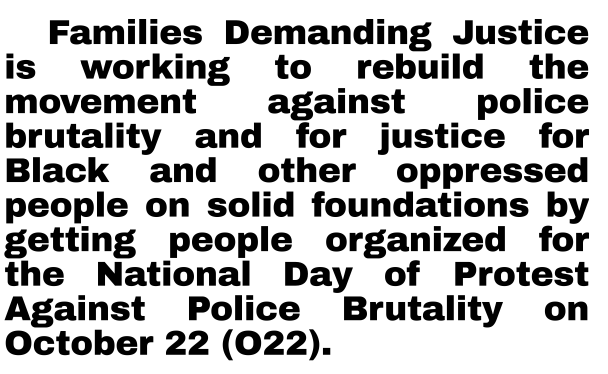
The movement we are seeking to build puts families and loved ones of the victims of police murder at the forefront, reviving a powerful weapon against police brutality.
We will unite all who can be united in this struggle, regardless of identity. And we will reject begging for reforms from politicians in favor of mass action.
We will be going to neighborhoods under the gun of police brutality throughout the summer and fall to mobilize youth and those who have the courage to stand up and speak for themselves and their communities. We will unite families and loved ones of victims of police murder from around the country to join in and take a leading role in the O22 National Day of Protest Against Police Brutality.


