
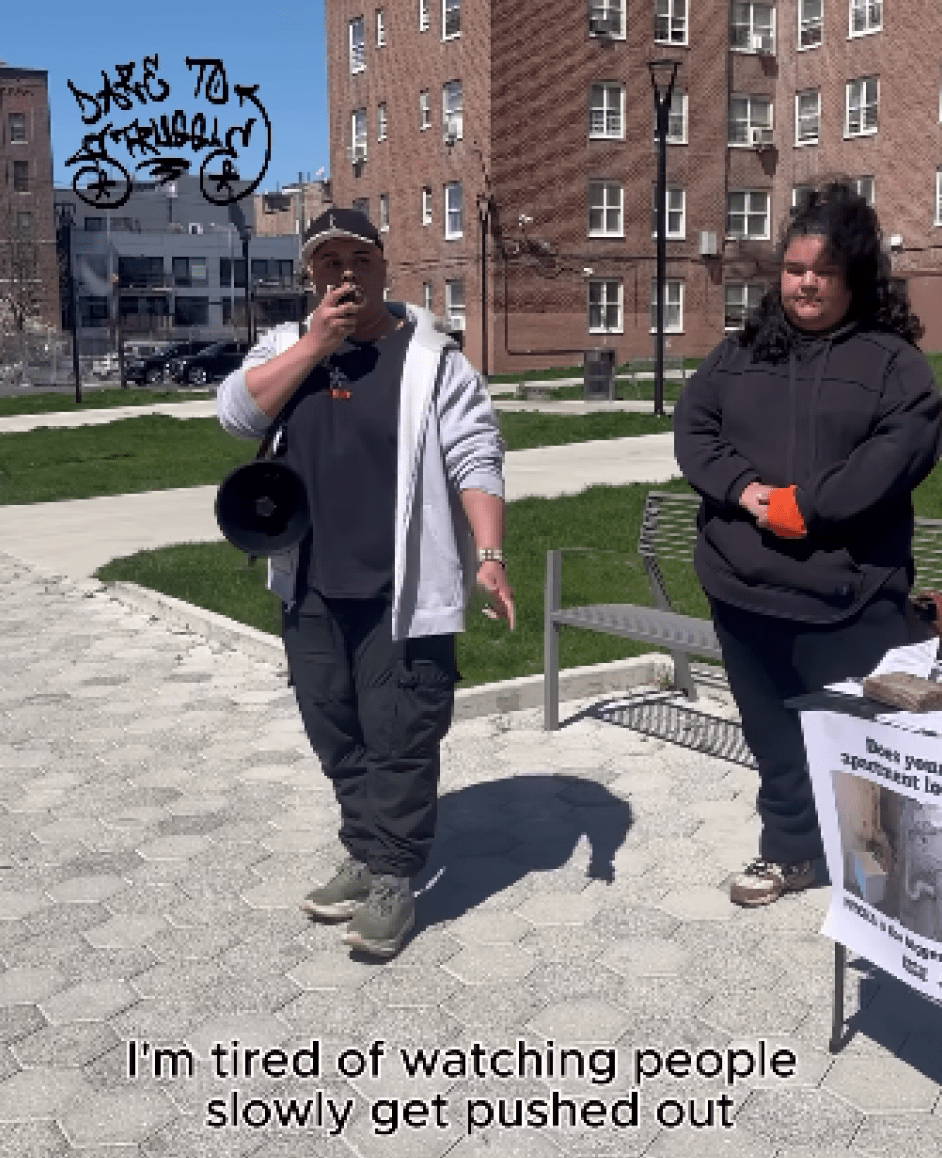
The privatization of Red Hook West Houses (RHWH) through PACT is moving full steam ahead while residents continue to speak out against it. Since September last year, NYCHA and their private partners, including BFJ Planning, have put on PACT meetings, supposedly to gather “resident input.”
Since March, Dare to Struggle has been linking with Red Hook residents to fight back against PACT privatization. We’ve held a speak-out, multiple meetings, and we’ve done weekly rounds of door knocking and talking to residents about their thoughts on PACT. Residents have been circulating a petition to demonstrate opposition to PACT. In response, tenant association president Karen Blondel has harassed residents opposing PACT, and NYCHA has passed around new packets and pamphlets spinning outright lies about PACT repairs and evictions. There’s been more news coverage exposing elevated evictions, including botched paperwork at multiple PACT developments that left residents fearing imminent eviction.
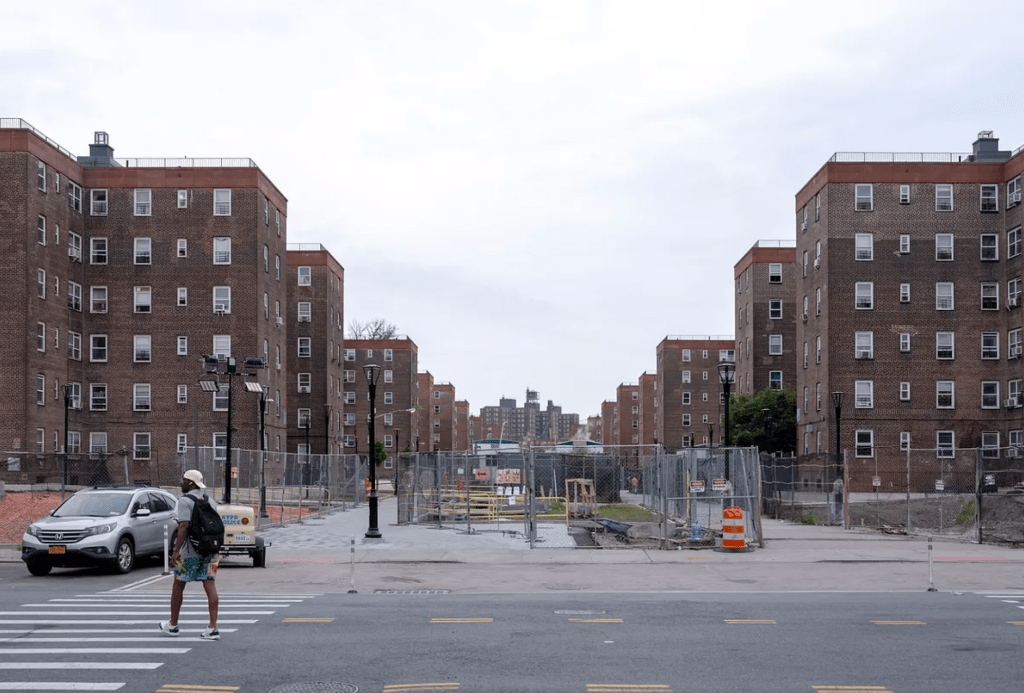
There is overwhelming disdain for PACT, both at Red Hook and across the city. As of right now, there are no more Red Hook West PACT meetings scheduled. NYCHA is entering the period where the agency will select a private management company who will takeover RHWH. Residents effectively will have no say in what company oversees the private takeover of their development.
The neighborhood of Red Hook has seen massive changes by way of gentrification and redevelopment in the last few decades. The Brooklyn Marine Terminal, which lay previously vacant of any residential or commercial spaces, is now undergoing redevelopment after a city task force voted it through, despite contention among a group of Red Hook residents. With a $3.5 billion budget, the project claims to build 6,000 housing units, supposedly with 2,400 “affordable” units. When discussing the realities of a PACT conversion, people often bring up the gentrification of their neighborhood, pointing to newly-built luxury buildings overseeing Lorraine St, which replaced a dollar store and a laundromat.
In conversations with Red Hook residents, they see the privatization of their buildings as part of the larger threat of gentrification. The people living in Red Hook Houses face unacceptable housing conditions, but newly-built condos, luxury buildings, and brownstones worth millions surround them. As of 2024, Red Hook was the most expensive neighborhood in Brooklyn. Bougie townhomes and new apartment buildings surround Red Hook Houses to the east, west, and north.
The people living in Red Hook Houses face unacceptable housing conditions, but newly-built condos, luxury buildings, and brownstones worth millions surround them.
Despite living in an increasingly wealthy neighborhood, Red Hook’s NYCHA residents still face neglect. This past week, during the heat wave, residents in one building on the A and B lines experienced frequent power outages. We learned of one person losing their insulin. Despite the millions of dollars that flowed into Red Hook Houses following the destruction from Hurricane Sandy, residents still experience power and light outages, leaks, temporary sinks, asbestos, lead, and rats and roaches. Walk one block past Red Hook Houses in any direction towards the water and you can find lobster and BBQ joints, breweries, pricey boutiques, and more million-dollar homes. The increase in new businesses and high-rises signals the rise of gentrification, and with that comes the ultimate price of displacement of long-time residents, reconfiguration of the neighborhood’s culture and people, and the isolation and destruction of public housing. Like sharks in the water, real estate developers, with the city government and NYCHA, circle and crowd the projects on all sides.
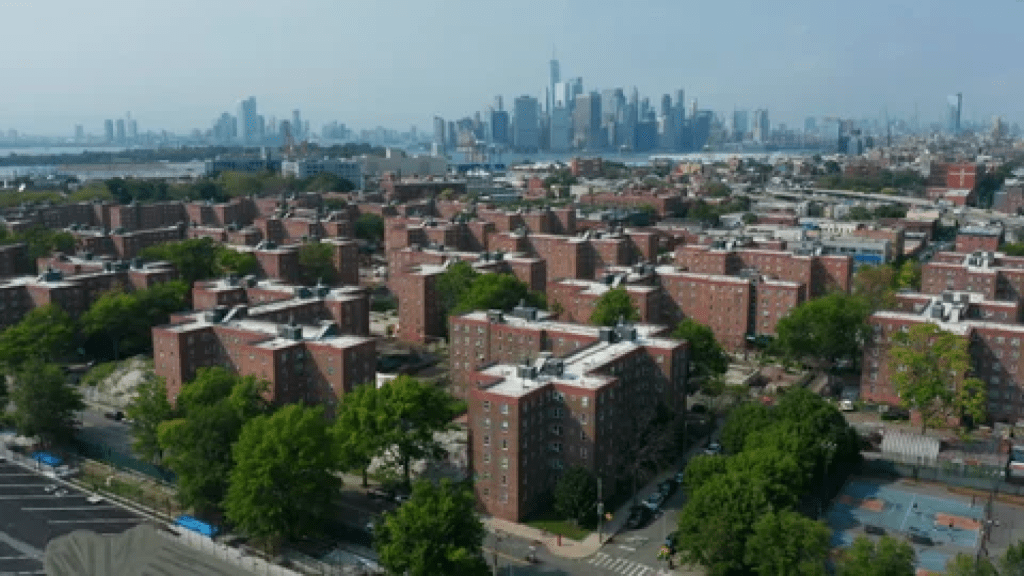
NYCHA is pushing to sway RHWH residents into believing that PACT will somehow bring the same comfort that wealthy residents of the surrounding Red Hook area live in. Most residents aren’t buying this, while also understanding that the nightmare they currently live in can’t continue either. Whether it’s handing off the management of the development to private companies or keeping it in NYCHA’s hands, the decrepit conditions and mismanagement will continue.
The real question is: what are the residents of Red Hook Houses willing to do about it, and how can they come together to pose a genuine threat to the forces trying to push them out of their homes?

