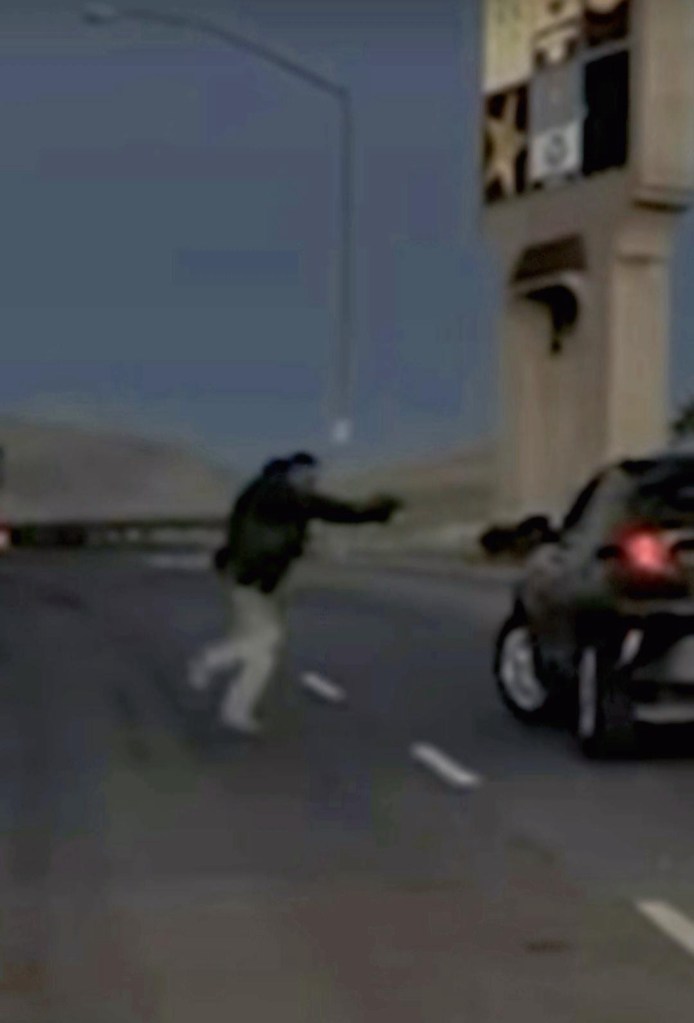
Four months to the day after an ICE agent murdered Renee Good in her car, ICE agents opened fire on Carlos Mendoza in his car in Patterson, California, hitting him six times and seriously wounding him. ICE did not render any aid to Carlos as he bled on the highway until paramedics came 30 minutes later. He was taken to the hospital and underwent surgery. He was held in federal custody at the hospital with limited access to his family, including his 2-year-old daughter, and his lawyer. In the last week, the feds have shipped him all over the state of California in an attempt to isolate him from his family and break any protest demanding his release.
The murder of Renee Good rightfully spread like wildfire with international journalists swarming Minneapolis to cover the story and its aftermath, along with tens of thousands of people pouring into the streets around the country to demand her killer, Jonathan Ross, be jailed. Four months later, the shooting of Carlos Mendoza has barely made it out of the Bay Area, and even there it has yet to spark widespread protests. What has transpired over the last four months that created the situation we are in today? What are the tasks of those who want to end the deportations and hold these killer ICE agents accountable?
Operation Metro Surge
Jonathan Ross executing Renee Good in the streets of Minneapolis on January 7th sparked defiant protests against ICE. In cities across the country, people descended on the buildings ICE operates out of, attempting to end ICE’s kidnappings and murders. The murder of Renee Good came around a month into “Operation Metro Surge.” Metro Surge was nothing less than an occupation of Minneapolis by 2,000 federal agents. Trump and his minions tasked these agents with terrorizing immigrants in the Twin Cities and flexing on the urban liberal middle class and their political representatives, such as Minneapolis Mayor Jacob Frey and Minnesota Governor Tim Waltz.
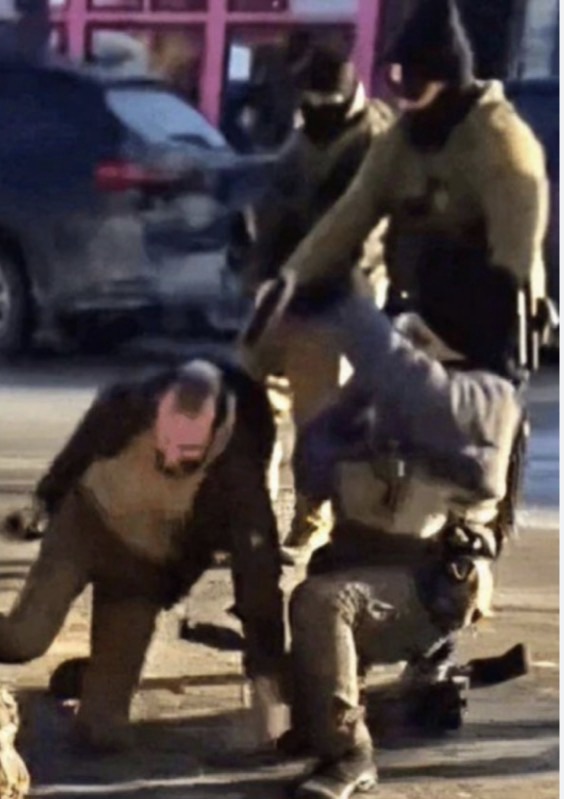
This jackbooted terror transformed life in the Twin Cities. ICE and Customs and Border Protection (CBP) viciously stalked and beat anyone they could get their hands on that fit their racist depictions of an immigrant. In response to this brazen violence, thousands of people, many of whom were not regularly involved in political life, started to make plans to end this madness, or at least slow it down. People formed “rapid response” networks. There were teams that tracked ICE movement across the city, and when ICE tried to detain someone they would call for backup. Broadly speaking, these confrontations were unable to actually stop ICE from kidnapping immigrants, but they frightened and enraged ICE agents and the Republican politicians.
Renee Good was departing one of these confrontations when Jonathan Ross executed her. Before her murder, the Metro Surge made it so that the residents of Minneapolis could not ignore ICE even if they wanted to and brought thousands of people into political action. After the killing of Good, with the specter of the 2020 rebellion haunting, anyone watching knew the city was a powder keg, and all political forces snapped into motion to shape how it would blow.
There were several defiant protests at the Whipple Federal Building where DHS operates. The “rapid response” groups ballooned in size and logistical sophistication. Street confrontations where DHS agents deployed tear gas, beat protesters, and made arrests became a daily occurrence. Protesters bravely stood down DHS across the country at ICE field offices and federal buildings. The Trump administration initially doubled down on their campaign of open violence, smearing Good and her widow as domestic terrorists, and sending 1,000 more thugs into Minneapolis.
The murder of Alex Pretti
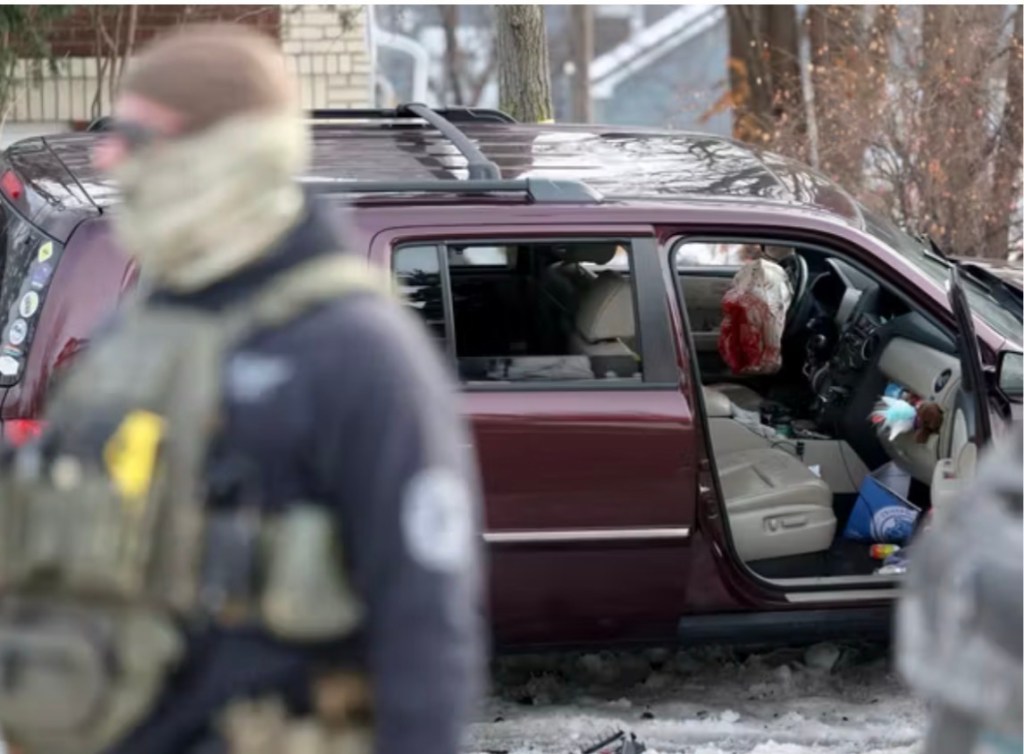
In the midst of this upsurge of protest on one hand and reactionary terror on the other, two and a half weeks after the shooting of Good, DHS agents in Minneapolis shot Alex Pretti in the back of the head during a confrontation. Protesters flooded the site where Pretti was killed and defiantly stood down federal agents and local cops, who attempted to break the protest with chemical irritants and batons. Mayor Frey and Governor Waltz condemned the killing, as they did that of Good, and called for sanctioned protests, but they did everything in their power to keep protests from militantly confronting the agency responsible for Pretti’s death. The night of Pretti’s murder, Mayor Frey, standing alongside his police commissioner, told protesters to “go home” after his pigs declared and unlawful assembly at the sight of the murder.
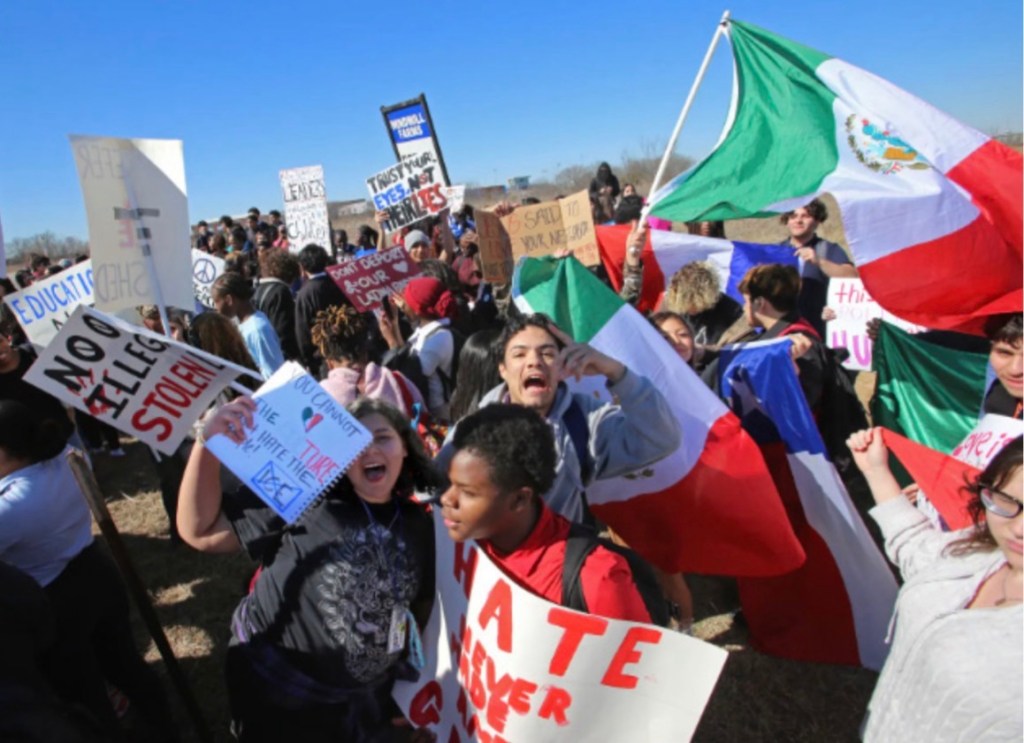
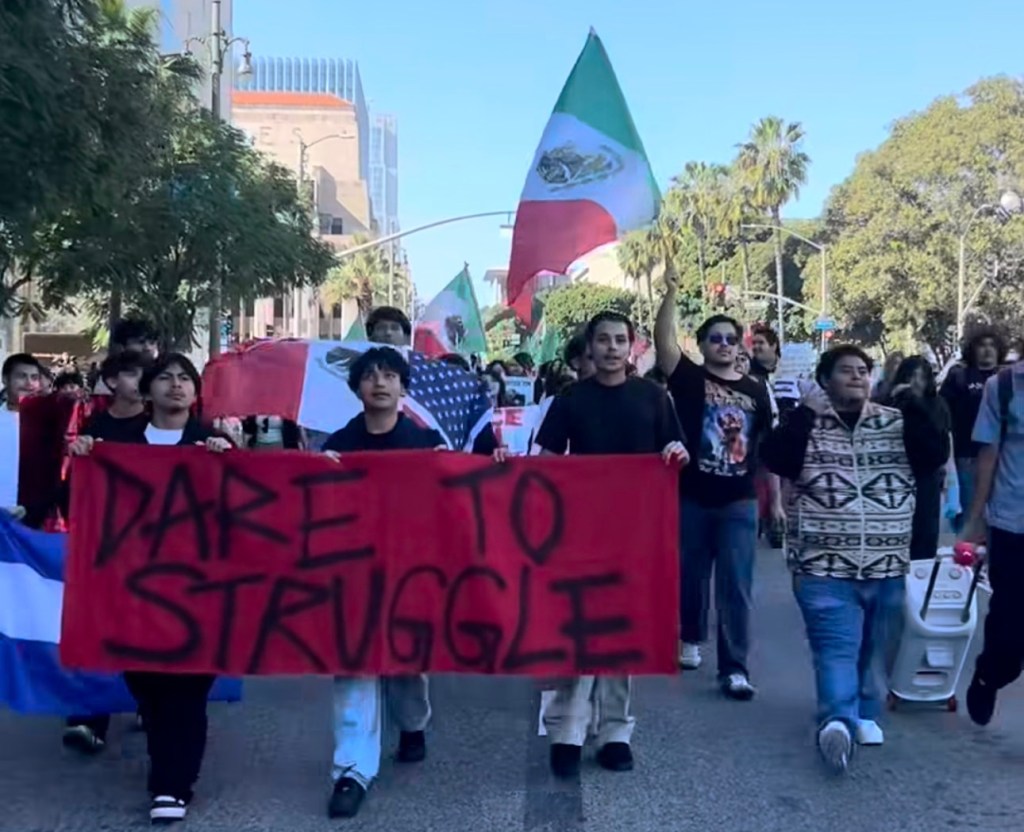
Fury about another cold-blooded execution by ICE swept the country. Students took the lead by walking out of school by the thousands, especially on February 13th, where thousands heeded Dare to Struggle’s call to walk out and protest at ICE’s infrastructure. The youth of Los Angeles struck fear into the hearts of DHS agents with their defiant actions at the Federal Building. There was a palpable change in the attitude of millions of people, from jaded disinterest in politics to a deep hatred of ICE and willingness to support forces who took militant stands against them. These mobilizations and change in mood forced Democratic politicians to start parroting demands coming from the movement. Bernalillo County District Attorney Sam Bregman, along with a host of other prosecutors, threatened to bring charges against killer ICE agents. A lot of bluster has only led to one prosecution across the country. Alexandria Ocasio-Cortez, along with several other legislators, called for ICE to be abolished. As an increasing number of people sought out ways to throw sand in the gears of the deportation machine, the Democrats desperately used this rhetoric to stay relevant as a political force and pitch voting blue in the midterms as a way the masses can end this nightmare.
Trump draws down but doesn’t slow down
The Trump administration responded to this uptick in activity and change in mood by tactically drawing down federal forces in Minneapolis. Greg Bovino, the operational leader of the Metro Surge in Minneapolis, became the administration’s sacrificial cow and was sacked along with DHS Secretary Kristi Noem. Bovino was replaced on the ground by so-called border czar Tom Homan, who has made a long career, starting under Obama, of refining the efficiency of ICE’s deportations.
Homan has no problem carrying water for ICE when they grab and beat down any non-white person they see, but he would prefer to dedicate ICE’s resources to tracking, apprehending, and deporting those ICE is confident they can legally deport, without the public fanfare that Bovino and Noem were whipping up. This is not out of an aversion to violence against immigrants—the Homan model is barbaric and involves the separation of families and caging masses of immigrants in concentration camps. He prefers this method because it is more efficient at deporting immigrants and has historically fomented less resistance.
Despite their growing size and popular support, the protests against ICE following the shooting of Pretti were still not capable of actually stopping the deportations. The Trump administration feared that if DHS killed another person in the weeks following Pretti’s killing, the mobilizations could grow and cohere enough to pose a real threat to the deportation machine. The strategy shifted to end the siege of Minneapolis while still kidnapping as many immigrants as they could, and terrify immigrants enough to paralyze them as a political force. As new DHS secretary Markwayne Mullin said in his confirmation hearing, his goal was “to keep ICE out of the headlines,” while still making good on the president’s mass deportation policy.
Terror out of the open streets to behind cement walls
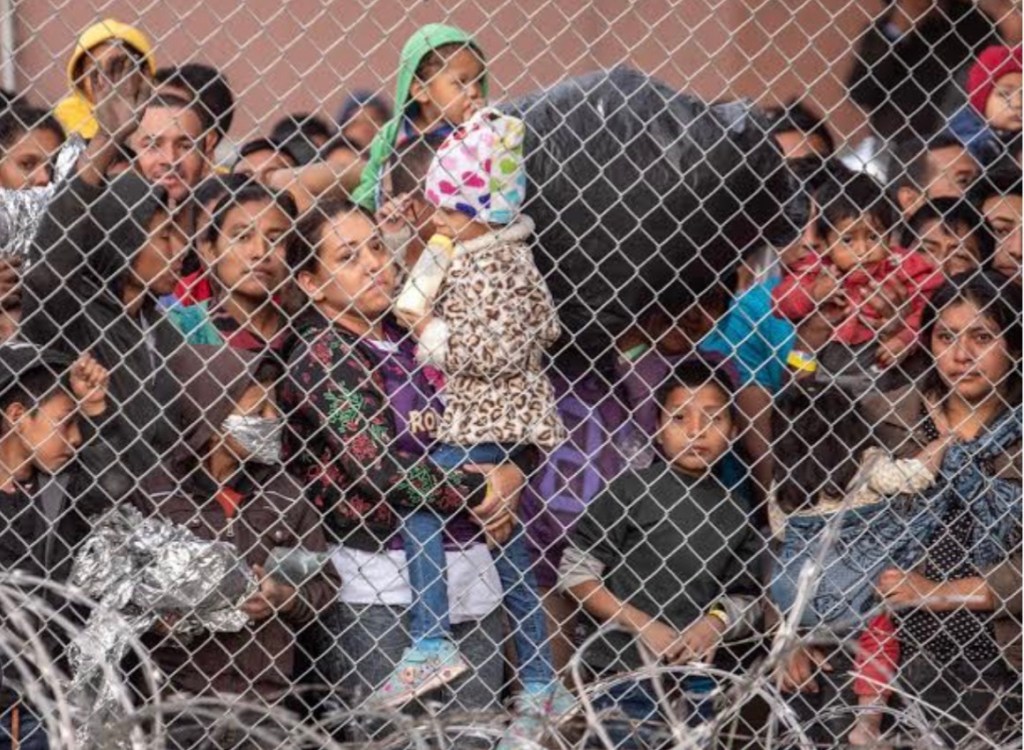
While Homan works to make removal operations as efficient as possible, DHS advisor Stephen Miller and his team pour money into building out deportation infrastructure, such as detention centers and DHS offices, to expedite deportations. A 17-year-old boy described the abuse he faced at East Montana Detention Facility, one of these detention camps in Texas: “[my] right front tooth broke from the force of being slammed to the ground… one officer grabbed my testicles and firmly crushed them, while another forced his fingers deep into my ears.”
Fernando Viera Reyes was detained in California City Detention Facility where he was denied cancer treatment and denied a biopsy to see if his prostate cancer had spread, despite his stool and urine being bloody. Another immigrant in this facility was placed in solitary confinement, a concrete cell smaller than a parking space, for asking to finish his shower. Raw sewage overflows from floor drains and insects crawl across every surface in many of these dungeons. The horrid conditions in these facilities have killed at least 14 people in 2026 so far. This terror unfolds behind prison doors, with little media attention or mass protests. Despite this depravity not making headlines, immigrants are well aware of what goes on in these prisons, as most immigrants have friends or family who have experienced it.
Stephen Miller is also working overtime to strip away Temporary Protected Status for immigrants, making more than 1.5 million people who previously legally resided in the US now eligible for deportation. Miller is working with state and federal legislators on laws that would forbid undocumented children from attending school. Like the open violence of 2025 and early 2026, these policies terrify immigrants into self-deporting or keep them in the shadows. Unlike the execution of white people in the streets of large cities, these policies fly under most peoples’ radars and have yet to generate mass protests.
Though the kidnapping of people in mass will inevitably result in some amount of public violence, the Trump administration is recalibrating their mass deportation strategy to bring the overt physical violence primarily back behind prison walls and in the homes of immigrants, where it has lived for decades. There are still players in the Trump administration, and within the rank and file of ICE and CBP, who would like to continue publicly beating and executing immigrants and protesters. But at least for the time being, this strategy is taking a backseat. Those of us who want to stop the deportations and kidnappings must not stop fighting back when ICE pauses on murdering protesters on the street, but also when they murder immigrants in prison camps.
There still aren’t any kings
The students who interrupted business as usual by walking out of their classes to confront the deportation machine helped kick off protests against ICE in 2026. Unfortunately, most of the protests that followed have refused to actually confront the deportation machine. The “No Kings 3.0” promenade on March 28th was a great example of this phenomenon. For the most part, the millions of people who were claimed to take part in marches did not not go anywhere near the facilities that ICE operates out of, or the detention centers that are the sites of torment. They instead strolled around downtown areas in front of closed government buildings, or even gathered in suburban parks. The speakers droned on about how proud they are of everyone showing up, ending with a call to get out the vote. Even those who offer more radical chic rhetoric like Chicago Mayor Brandon Johnson’s call for a “general strike” at a No Kings protest last September offer no guidance on how this can be organized, what the strikers would demand, and how they would achieve these demands.
Speakers also generally implore protesters to not let this be a one-time thing and to plug into the movement. Their version of a “movement” is ill-defined, consisting of some amalgamation of mutual aid, “know your rights” trainings, and maybe “rapid response” networks. Helping immigrants, many of whom have quit their jobs out of fear of ICE snatching them up if they leave the house, is a good thing to do. But being charitable is not a strategy that can end this nightmare. Showing up with cold food and cards with “rights” that the feds are regularly violating can never stop the deportations—an outcome that doesn’t even seem to be the goal. Bringing food while not trying to bring immigrants into political life is in essence saying “keep your head down and leave the politics to us.” Immigrants defiantly taking the political stage has the potential to rock this wretched society to it’s core. Those of us who dedicate ourselves to stopping the deportation machine must do everything in our power to bring forward masses of immigrants as a force in political life and not relate to them as charity cases.
“Rapid response” group chats also have formed in nearly every city. These chats are populated by people looking for ways to stand up against ICE. Many of these group chats were created in 2017 during the first Trump administration, but exploded in popularity after thousands of people in Minneapolis used them to confront ICE in early 2026. There’s no knowing when ICE will stage an assault in broad daylight, so most “rapid response” group chats have never even responded to a single kidnapping, which has left a tremendous amount of people, with little to no experience in defiant protests, but who want to do something to stop ICE, with little to do besides being restless and anxious.
Even in Minneapolis, where it was possible for “rapid response” group chats to track and pull up on ICE when they were on the prowl, these confrontations by and large were unable to stop ICE from kidnapping immigrants. That is not to downplay the role they played in the administration’s tactical retreat from Minneapolis, or from the administration decision to back off the strategy they deployed in Minneapolis more broadly. Nor is it to brush off the fact these groups brought masses of people into political action, much of which directly and bravely confronted the DHS. But we need a sober reflection that a different strategy is required to end ICE’s kidnappings for good.
It’s not the best cake, but you still can’t unbake it
ICE shot Carlos Mendoza four months to the day after shooting Renee Good. Thousands took to the streets across the country to demand justice for Renee Good, while dozens took to the streets in a couple cities to demand justice for Carlos Mendoza. National media outlets didn’t pick up the story en masse, at least in part due to the fact Mendoza is a Salvadorian immigrant and Good was a white US citizen. It is also due to the moves made in the last four months by the Republicans and Democrats to stifle mass rebellion against ICE largely proving to be effective. The Republicans cooled their open violence, and the Democrats are holding sporadic parades and signing people up to vote and knock on doors for their candidates. Neither of these moves stopped the deportations, but they did conceal them and misdirected people away from means that are actually capable of stopping them. The failure to counter these moves with a coherent strategy to build mass resistance that can be widely adopted falls at the feet of those who are serious about stopping mass deportations in this country.
We must examine and take responsibility for these failures in order to chart a path forward that leads to the mass resistance required to get these murderous ICE agents thrown in jail, and ultimately stop the deportations for good. In the last couple months, millions of people came to the conclusion that ICE must be opposed by any means necessary. Most of these people have not been drawn into political activity that can actually stop ICE, but they have not changed their minds. With the midterms coming up, the Democrats will make promises to hold ICE agents accountable. They have no intention of keeping these promises, but will use them to draw people disgusted with ICE into their campaigns. Democrats will likely find some success, even if many of these people are skeptical of the party, owing to their massive reach and the lack of alternatives available to these outraged people.
It is our responsibility to consolidate those not swayed by electoral illusions and wage offensive campaigns aimed at different aspects of the deportation machine. Examples of these struggles are demanding killer ICE agents are charged. These campaigns can target district attorneys and attorneys general, hounding them wherever they go, and relentlessly mobilizing masses of people to take to the streets, clogging the arteries of our cities, until this demand is met. There must be campaigns to close ICE detention centers, ICE field offices, and ICE subcontractors offices. We must bring people out to these sites and impede their functioning until they are forced to shut down. Through these campaigns, we must build the organization required to confront this machine head-on. We have seen small glimpses of what it will take to end the deportations—the defiant protests at the Federal Building in Los Angeles, and protests at the Broadview detention center in Chicago to name two. We must work to make these protests grow in size, coordinate them across the country, and scale up what the masses mobilized at them are capable of pulling off.
Throughout the last four months, immigrants have been involved in the protests, but have not come out in droves or played a decisive role in them. The children of immigrants have played a leading role in the most defiant protests of the last four months, especially the school walkouts. The children of immigrants must take leadership in these campaigns, with tremendous effort spent bringing large sections of immigrants into political action.
In the likely scenario the Democrats win big in November, we must expose them when they inevitably fail to hold killer ICE agents accountable or put an end to the deportations. If we are effective at exposing the Democrats while building mass resistance to ICE this summer, we have the potential to bring many people whose eyes have been opened about ICE into political struggle that takes aim squarely at the entire government responsible for these depravities, not just Trump and his cronies. It starts with taking responsibility for organizing campaigns against the deportation machine in your city and coordinating these efforts with people across the country. Dare to Struggle’s Spring Surge to Melt ICE has laid the ground work for these campaigns in cities across the country. Get in touch with us to dig into bringing forward a people capable of freeing the kidnapped, stopping the deportations, and jailing killer ICE agents.