No future, no future, no future for you! – Sex Pistols, “God Save the Queen”
Young people today are up against a wall. As the crumbling US empire continues to lash out against the poor and oppressed around the globe, from the bombs dropped on the heads of Palestinian children, to migrant families ripped apart by ICE, to the pig police continuing to kill with impunity across the US, capitalism-created climate change intensifies and threatens the existence of humanity. Young people face a bleak future, and society offers no hope, passing down all of these problems with no solutions. Many try to to escape these realities with drugs, alcohol, self-harm, and even suicide. Others get into alternative culture that taps into people’s pent up rage against the system and lets people be themselves.
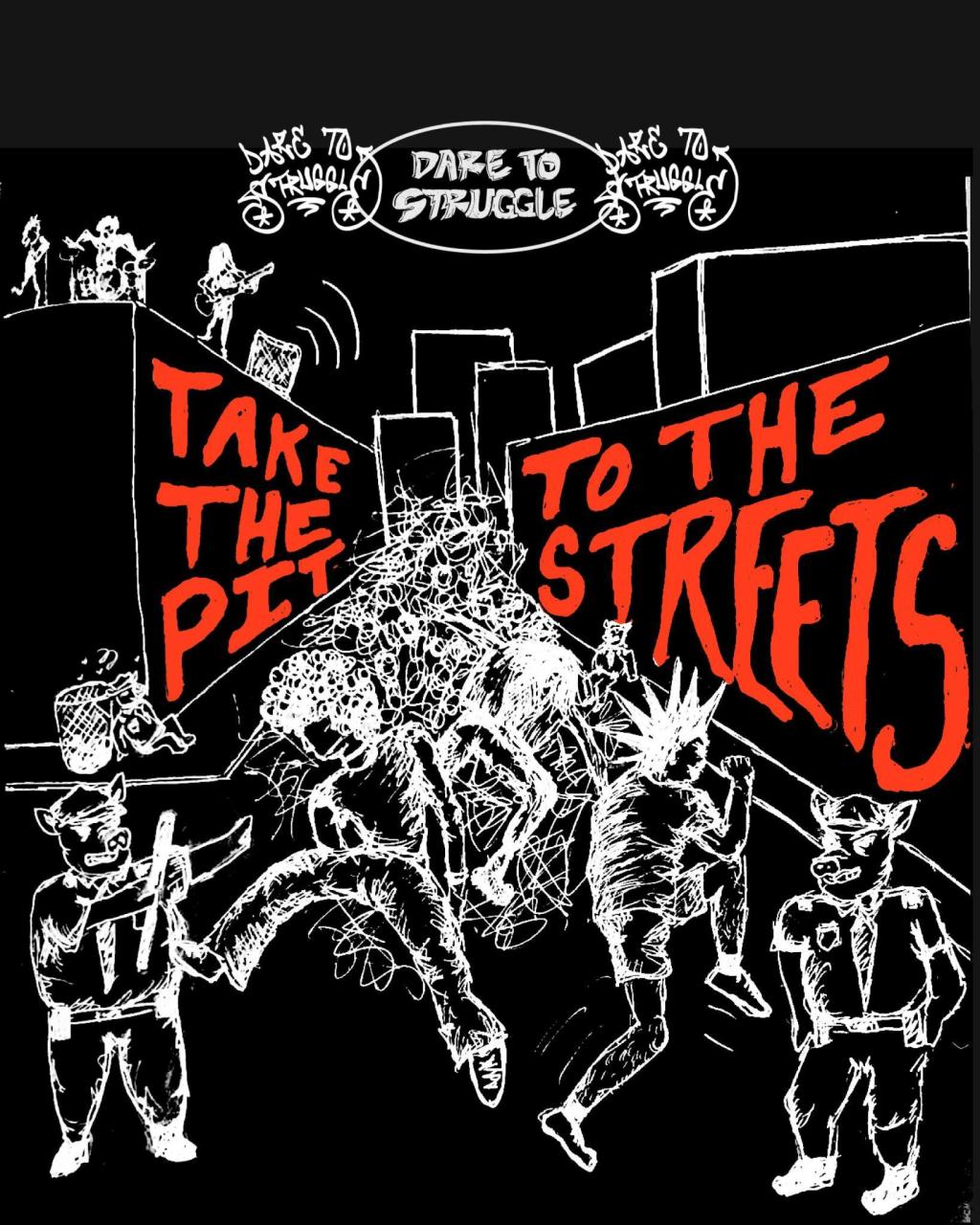
For many youth, the hardcore scene is where they feel most at home, a place where you can act out your rage and express how you really feel. Hardcore is filled with militant lyrics and aesthetics. Bands often adopt tough-sounding names, write songs about fighting fascists, police, ICE, and the authorities more broadly, and use art displaying guns and butchered pigs. Kids at the shows will rock camo pants and army boots and throw punches and kicks in the pit. But when the show is over and everyone goes home, the militancy often goes home with it.
It is right to rebel against the capitalists, their cops, and the entire fucked up system, but it’s important to do it in a way that gets shit done. Unfortunately, coordinated mass movements with the power to shake the foundation of the system are almost entirely nonexistent today. Tame NGOs, opportunists, and Leftists –who never go to the masses to bring ordinary people into the fight — assert themselves as de facto leaders of every struggle that breaks out into open rebellion. While NGO grifters and opportunists use these rebellions to advance their careers, Leftists inevitably lead the masses absolutely nowhere and accomplish nothing.
Dare to Struggle is trying to build a militant, mass movement against the system that can bring in thousands of people from different walks of life and put an end to the American nightmare once and for all. Like aspiring revolutionaries before, we see the potential of the youth today. We saw this potential in those who broke out in open rebellion in 2020, taking to the streets and facing down rubber bullets and cops in riot gear. We saw it again in those who took the Pro-Palestine movement to the next level during the encampments, taking over buildings on their college campuses and fighting off police. Most recently we’ve seen it in those who have faced off with the National Guard in the streets of LA, fighting back against ICE agents and the mass deportation machine. This is the kind of defiant spirit required in any movement serious about shaking shit up.
The hardcore scene has a lot to contribute to the struggle to topple the American nightmare. We’ve seen first hand the high energy, political consciousness, and bold spirit embodied by hardcore kids. But let’s be real: You can’t be a rebel on Saturday and a conformist on Monday. You can’t just look and talk edgy while obeying the orders of the system. You can’t claim to be against racism, fascism and sexism without going out into the streets to fight it. There’s a word for people who act that way: posers! The hardcore scene of the past knew exactly how to handle posers (just read American Hardcore!). The scene of today seems to have forgotten.
Dare to Struggle wants to tap into the revolutionary potential of the pit. It’s one thing to take part in a scene with vaguely anti-establishment leanings, quite another to build and organize a movement with real politics and power. The hardcore scene has taken on the politics of revolution in the past, and it’s high time the scene as a whole embraces them once again.
Punk and Politics
“Dance and sing, plead, Praying for peace. But they won’t hear you, No, not in the least. You’re enraged and you’ve got to show. Cause silence is defeat. Yes, silence is defeat.” – 7 Year Bitch, “No Fucking War”
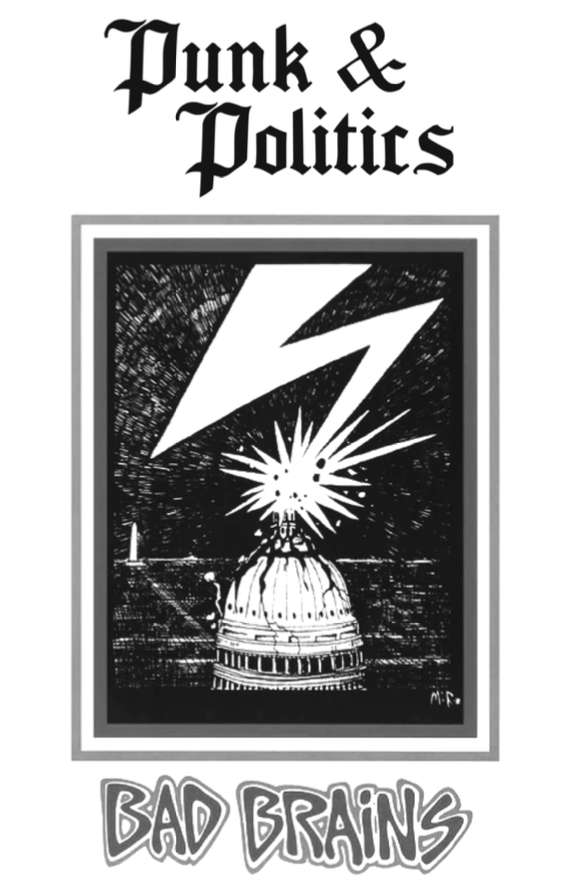
Punk has always been an anti-establishment cultural scene. The mere combination of quick tempo beats, heavy riffs, and aggressive lyrics set punk apart from the mainstream culture and music in the 1960s. In an act of protest against norms and conformity, punk was quickly embraced by society’s outcast youth (proletarian and oppressed, queer, and immigrant kids). Its origins naturally led to an embrace of progressive political causes, with bands becoming more outspoken on social issues like racism, police brutality, and imperialism as time went on. Bands like The Clash, Dead Kennedys, and Bad Brains are a few of the notable examples of bands embracing these kinds of causes. As punk scenes grew, fans began to embrace these politics as well. In the past few decades, punk scenes have increasingly leaned anarchist, with anarchist crews forming at shows and from bands.
However, as some bands and scenes began to embrace progressive political causes and even Revolutionary politics, many others tried to remain “apolitical”, seeing the adoption of specific ideological positions as “authoritarian” and antithetical to punk culture. Content with their niche subculture, many bands have denounced efforts to try to “politicize” the scene, claiming that getting punks to take hard line stances is counterintuitive. Today, there are plenty of these “apolitical” bands who refuse to use their platforms and the scenes they come from to embrace politics. The problem with this thinking is that it neglects the reality that everything is branded with politics. Whether you like it or not, politics is always leading people in some direction. If it’s not forward, it’s backwards. Bands and scenes who seek to remain “apolitical” only serve the status quo by never challenging it themselves, at least in any real capacity outside of edgy lyrics and graphic t-shirts. Even worse, by trying to keep politics away (especially the politics of Revolution), they open themselves up to reactionary ideas and allow the scene to be pulled in another direction.
The European punk scene in the 70s and 80s is just one example of the scene getting pulled in a more insidious direction. During this time, neo-Nazi organizations in Europe began to recognize that the punk sub culture was ripe for new recruits. Made up of mostly white working class youth, neo-Nazis made explicit attempts to recruit within the punk scene, going so far as to form neo-Nazi bands directly related to and funded by Nazi parties. Neo-Nazi Skinheads (aka Boneheads) began to expand across European and US punk scenes, defining the vague anti-establishment politics of the scene as racist, anti-migrant, and homophobic. This infiltration of the punk scene allowed for the proliferation and popularization of Nazism, in some instances leading to violent, racist, and deadly attacks outside shows. The scene’s refusal to take a stand early on opened it up to this infiltration, which eventually forced many of the former “apolitical” punks to really take a stand.
With the rise of Boneheads in the scene came the rise of anti-fascist punks and skinheads who wanted to reclaim it. Anti-racist skinhead crews like SHARP (Skinheads Against Racial Prejudice) and RASH (Red and Anarchist Skinheads) formed to defend venues and shows from Nazi attacks. But one crew would go even beyond the scene itself; uniting with people in the streets and going to the masses with their politics, setting a modelfor today’s would be revolutionaries in the scene to take it to the next level.
Anti-Racist Action
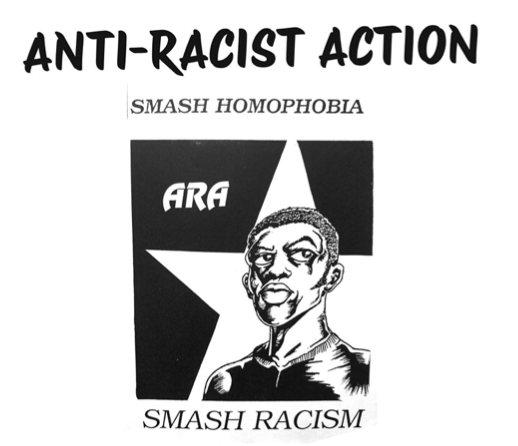
Anti-Racist Action was born in the Minneapolis hardcore punk scene in the late 1980s out of a group of anti-racist skinheads called the ‘Baldies’. The Baldies started out as another anti-fascist crew to protect the scene, but would eventually take the leap beyond just protecting their fellow punks. In 1995, the ARA adopted their first point of unity: “We go where they go. Whenever fascists are organizing or active in public, we’re there. We don’t believe in ignoring them or staying away from them. Never let the Nazis have the streets!”. These punks understood that if they didn’t actively fight back against Nazis (often literally getting into fistfights with bonehead crews) and mobilize their neighborhoods to fight alongside them, they would lose the only places where they could be themselves. They also understood that in order to deal real blows to Nazi organizers, they had to get out of their own scene and disrupt Nazi rallies, shut down racist skinhead shows, and organize things like defense perimeters around abortion clinics that were target by Neo-nazi groups.
Within their own spaces, they set hard-line rules to keep Nazis out. In the Bay Area, for instance, well-known punk venue 924 Gilman Street had rules painted on their wall that included “NO RACISM, NO SEXISM, NO HOMOPHOBIA, NO TRANSPHOBIA”. It was up to venue members themselves to enforce those rules.
Anti-Racist Action mobilized hundreds of chapters and thousands of activists, reaching a peak, according to Columbus ARA member Gerry Bello, of 179 chapters in 1999. ARA’s example shows us that isolated acts of militancy aren’t enough to defeat our enemies and fight oppression. We need to build a movement that connects people in the scene with a mass movement outside of it, tapping into the revolutionary potential of all people who want to strike real blows against the system.
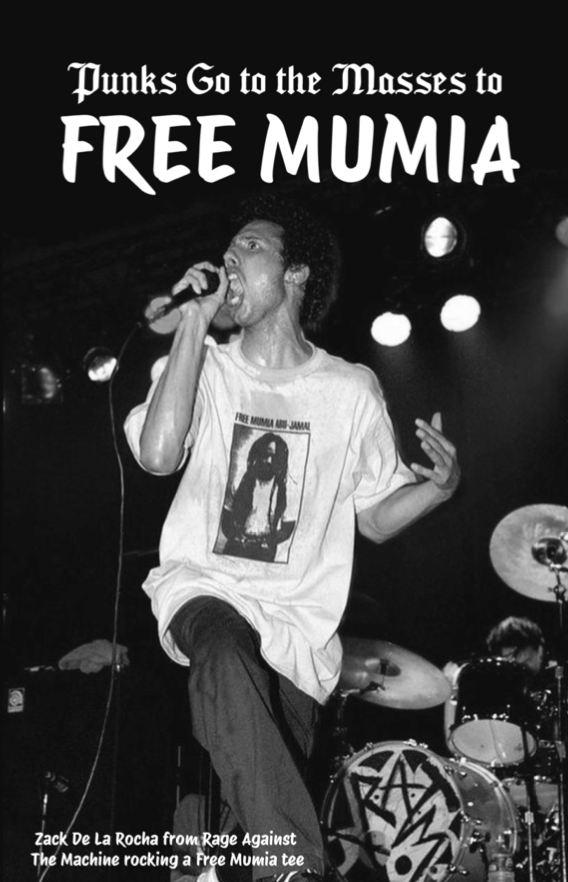
Punks Go to the Masses to Free Mumia
Another example of punks stepping out of the scene and into the streets was during the movement to Free Mumia. In 1982, Mumia Abu Jamal, a former Black Panther, was working as a revolutionary journalist when the Philadelphia police framed and arrested him for killing a cop. The ruling class and their loyal pigs had been gunning for Mumia for years due to his political activism, and promptly sentenced him to death. Despite the state’s tampering with evidence, Mumia and his defense proved not only that he was innocent, but also that he was a victim of COINTELPRO (Counter Intelligence Program) — a coordinated campaign by the FBI to “neutralize” radicals in the US through smear campaigns, imprisonment, and outright assassinations. There are many political prisoners in the “land of the free”, but at the time, Mumia was the only one sent to death row. The system came at Mumia hard, and by the mid-1990s it was making serious moves to execute him.
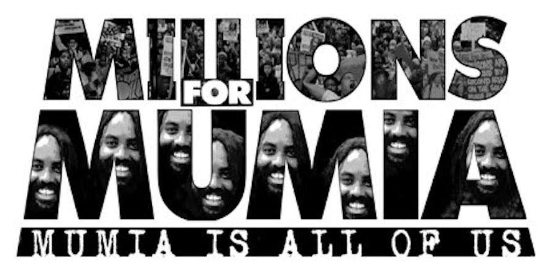
Outrage at the state’s brazen, bloodthirsty plans brought people together in a mass movement to Free Mumia. Groups like Refuse & Resist (R&R) went door-to-door in Black proletarian neighborhoods in Philadelphia to talk to people about the campaign and distribute Mumia’s 1995 book Live From Death Row. Discussions about the campaign toured universities across the US to educate students and challenge them to get involved. Free Mumia activists coordinated a media campaign to get the word out on late night television and in the news. At the same time, activists organized protests and marches to shut shit down (not to be confused with the hi-viz vest loser protests today that coordinate with the cops). The Philadelphia Freedom Summer (organized by R&R) brought buses of people to Philly to go to the masses and hand out flyers, agitate about Mumia’s case, and organize protests to demand his freedom. Millions for Mumia marches took place in Canada, Spain, Germany, Ireland, Portugal, Austria, and Australia. The campaign was truly a mass movement, and it ultimately succeeded in forcing the bourgeois state to back down from killing him.
Activists brought forward many proletarians, radicals, university students, rastas, and religious people to stop the execution of Mumia, but relied especially on involvement from the punk scene. Across the U.S., festivals, benefit shows, and bands themselves encouraged the crowds to join the struggle. If you ask an old-head who was in the scene during the mid to late 90’s, chances are they’ll remember seeing Free Mumia tables at shows. Bands like Rage Against The Machine and Bad Religion played sold-out shows in support of Mumia, rocked Free Mumia tees, and went on live TV to talk about the movement to stop his killing. The band His Hero Is Gone played a show at the Millions for Mumia march, bringing out hundreds of youth to the city to participate in the protests and throw down with the cops in the street. These young punks, who got into the scene due to its high energy and defiant stance against the status quo, went into the streets and played an important role in the battle to Free Mumia and against the system at large. Some of these youths went on to be revolutionaries and life long activists after their experiences in the movement for Mumia.
The Free Mumia movement was truly a mass movement that reached nearly every corner of society, bringing thousands of people from different walks of life together and fulfill unique roles in the struggle, and in direct confrontation with the system in order to save Mumia’s life. While Mumia still remains behind bars today, the state was forced to back off from killing him outright. Punks played a piviotal roles in bringing forward youth to not just care about Mumia’s life, but to get in the streets, to thrown down with the pigs, to try and save Mumia’s life. This is exactly the kind of motivation and energy needed today.
Conclusion
“Let’s have a war! Give guns to the queers! Let’s have a war! The enemy’s within! It already started in the city! Suburbia will be just as easy!” – Fear, “Let’s Have a War”
We need to build an organized, bold, and audacious movement against the American nightmare; one that lives and expands in the streets, one based among the oppressed, one that resists and fights for a better world.
We’re calling on the youth to join this struggle. Hardcore punk kids can bring the energy of the mosh pits into the streets. Hip hop kids can spit bars to unite the people, expose the system and agitate for revolution. Graffiti artists can paint the town with revolutionary slogans and calls to action. Car dudes can take over intersections while skaters teach the crowd how to escape from the pigs when shit gets hot. Biker crews can stop traffic while protesters march from block to block, scout ahead to look for police, fuck shit up and bounce. And everybody who has some shit to say about this fucked up system can get up on the megaphone and make the enemy shake in their boots. If we want to strike real blows against the system it’s going to take young people from every scene to get together, train up as leaders, and bring militant resistance to the masses!
Hardcore kids need to get real about what we’re facing and commit themselves to standing with those facing the worst of it. From victims of police brutality and families and inmates facing mass incarceration, to immigrant families facing the constant threat of deportation, to women and LGBTQ people facing patriarchal violence, there are millions of people under attack by the system, people who can be mobilized to fight back against it. Are you gonna stand with them, or are you gonna leave them to face their oppression alone? We’re challenging hardcore kids and young people from every scene to take the pit into the streets, go to the masses, and throw down against the system. It’s do or die. You in?
Further Reading
- The Politics of Punk by David Ensminger
- We Go Where They Go: The Story of Anti-Racist Action
- American Hardcore: A Tribal History
 Dare to Struggle