From Dare to Struggle’s inception, we’ve had to contend with various Leftist myths in opposition to our mission statement, such as “you have to give people free food before you can try to organize them,” or “you can’t talk to people about politics who aren’t the same identity as you.” Three years since we got started in New York, and now with five chapters across the country, we’ve found these and other Leftist myths to be completely unfounded. But people still hold these misconceptions without ever assessing if they’re valid through direct experience or studying history.
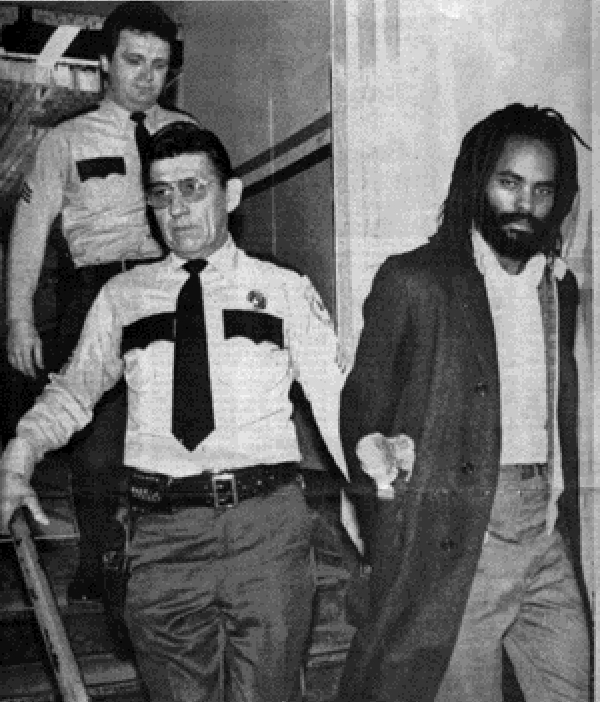
Over the last year, as arrests have racked up from protests against the US-Israel genocidal war on Gaza, another Leftist myth has gained increased traction: that when faced with arrests, charges, and political repression, if you speak out publicly about it, you’ll just be putting those arrested and facing charges at greater risk—or, in popular activist lingo, you’ll do “harm” to others. We’ve tried to find examples of where exposing and speaking out against political repression has made things worse for the targets of repression, and we’ve asked those raising the concern that question, but we haven’t found any cases. We can think of plenty of examples where speaking out and building support has helped: the movements to free Angelo Herndon, Huey Newton, Mumia Abu-Jamal, the Nickerson 7, and many more. Not all movements to defend someone facing political repression have been successful (Leonard Peltier is still in prison, for example), but exposing and speaking out against the repression nonetheless brings these cases into popular consciousness and garners mass support.
In the case of Mumia Abu-Jamal, the lack of mass political resistance during his original trial allowed police, prosecutors, and Judge Sabo to get away with framing him, despite Mumia’s courage in court. Throughout the 1980s, a relatively small movement—“the reds and the dreads”—gradually built popular support for Mumia by exposing the frame-up with protests and propaganda efforts. When the State of Pennsylvania moved to execute Mumia in 1995, the movement mushroomed, and it was the mass protests, widespread exposure, popular outrage, and efforts to rally public figures to Mumia’s defense that prevented his execution. The ruling class knew that Philadelphia would have burned if they murdered Mumia, and that wider sections of people would have seen the execution as a political assassination.
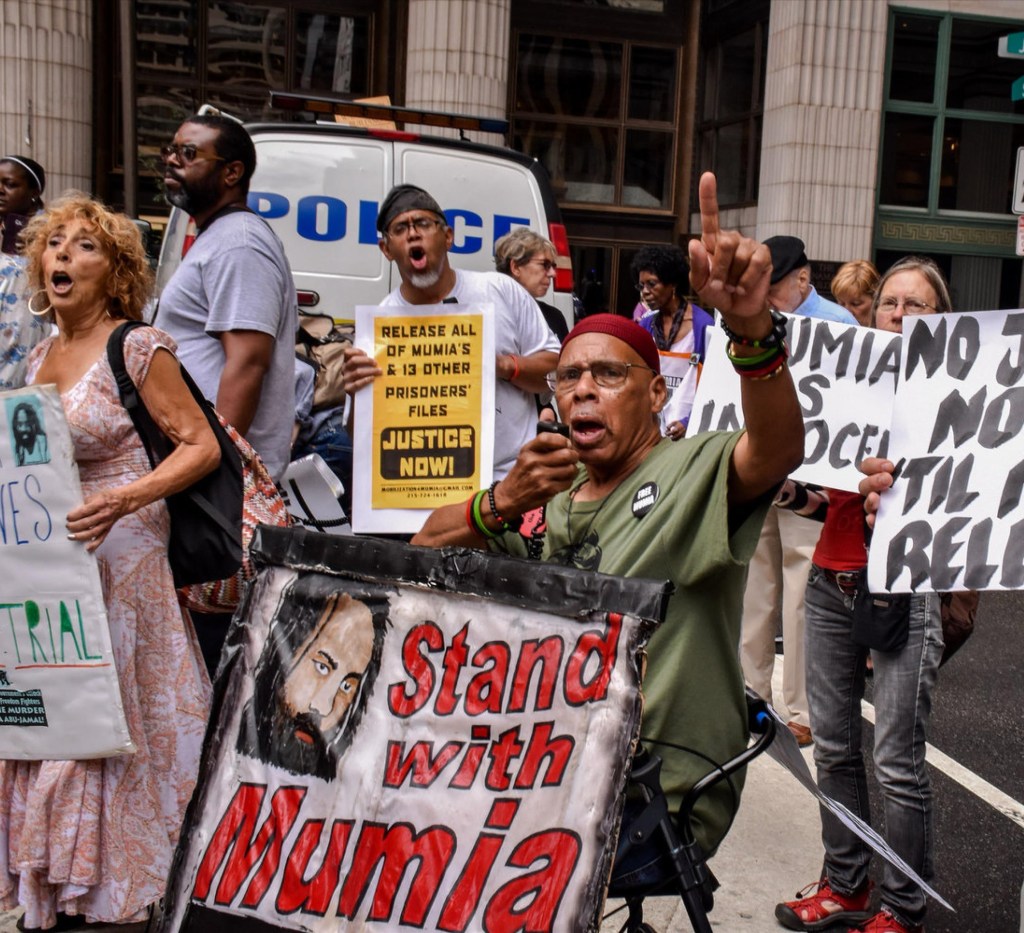
The movement to free Mumia not only stopped his execution; it also generated a wider consciousness about police brutality, mass incarceration, political repression, and the history of the Black liberation struggle. Black and oppressed people and rebellious youth widely identified with Mumia and saw their struggles as connected to the struggle to free him. Though the movement never freed Mumia, it did succeed in removing the threat of execution, raising people’s political consciousness, and demonstrating the power of mass struggle. Everyone in the movement to free Mumia, including his lawyers, understood that Mumia’s fate depended principally on the political struggle, not what went on in court.
More recently, dozens of courageous protesters fighting to stop the construction of Cop City, a police training facility in Atlanta, have faced serious charges, including RICO enhancements and domestic terrorism, with potential prison time. One protester, Manuel “Tortuguita” Terán, was assassinated by law enforcement. Exposure and mass protest against the police actions and the legal charges helped bring the political repression into the public consciousness. Yet, and in contrast to the movement for Mumia in the 1990s, the lack of a sustained national mass movement to demand all charges be dropped has allowed the cases of Cop City protesters to fade from public view, despite efforts by a dedicated few. The court system’s actions, from elevated charges to ordering many defendants not to speak to each other, were geared exactly to intimidate and prevent those facing charges from speaking out publicly.
So why haven’t there been sustained movements to defeat political repression lately? We see this myth that speaking out against political repression will hurt your chances in court bearing a lot of the blame. The result is that many people arrested at pro-Palestine protests in the last year are silently accepting plea deals on the questionable advice of lawyers, without exposing the police brutality at their arrests or insisting that political speech should be protected, not the cops who repress it.
The intimidation of protest arrestees is especially effective when arrestees are abandoned by the broader protest movement to fend for themselves, as happens all too often. Furthermore, lawyers frequently counsel protest arrestees not to speak out, as it could be used against them in court. Certainly, especially when facing heavier charges, protest arrestees need to be strategic about what they say and who should speak publicly. But when has exposing police repression ever harmed a political defense? We can’t think of a single example. We need more lawyers willing to really fight political repression inside and outside of court—lawyers like Lynne Stewart, Leonard Weinglass, and Chokwe Lumumba Sr.—not ones quick to advise taking deals, which often include stipulations that prevent people from risking another arrest at a protest for a period of time.
Sometimes, not making a political fight out of the repression of protest is rationalized with the argument that doing so will distract from what the protest movement is about in the first place (the genocide in Gaza, police brutality, etc.), or that it will put the focus on the protesters instead of those bearing the brunt of the system’s brutality. We see fighting repression of protest not as a distraction, but as both a necessity, so that we can keep resisting, and a crucial way of advancing the struggle. Building mass support for those facing arrest, charges, and repression is a way of bringing more people in, connecting the fight against repression to their daily struggles, and showing people that we don’t have to accept any of the injustices the ruling class perpetrates.
As one example to back up our claim here, in Summer 2023, we went out broadly to the masses with a campaign to support the Cop City protesters facing charges. We found a warm reception from many people, especially those with firsthand experience of police brutality and the criminal “justice” system. Notably, most people we met had not heard of Tortuguita, the elevated charges, or even Cop City, indicating the importance of going outside Leftist circles to build mass support.
Moreover, fighting every instance of political repression, even ones with relatively minor charges, is crucial to building up our strength and training ourselves and the masses for the bigger fights, against more serious charges. The ruling class has taken great efforts to demonstrate to the masses that any militant resistance and revolution are impossible because they’ll be crushed—in essence, that there’s nothing we can do about repression. This makes it critical to show that it’s possible to not only defeat the inevitable repression thrown at us, but to advance our struggles in the face of it.
We write this after Dare to Struggle’s action in New York on the October 22nd National Day of Protest Against Police Brutality was attacked by cops from the 73rd Precinct in Brownsville, Brooklyn. 15 protesters were arrested that day, with most slapped with baseless summonses charges, but also a few facing more serious ones. Our New York chapter did not initially handle the situation well, without a solid plan for dealing with the arrests and exposing the repression, and with some of our members not taking responsibility for the situation.
Since the initial mishandling of the situation, we’ve worked to mount a campaign to expose the brutality and repression at the protest, demand all charges against protesters be dropped, and demand the police be charged with assault. Our approach of holding press conferences to expose these injustices has been met with opposition from lawyers and Leftists, rationalized with the myth that exposing and politically fighting the repression will make things worse for those facing charges. We’ve made efforts to debate that out, including among those arrested on October 22nd. But ultimately our approach to repression will be the same as our approach to all injustices: expose it, fight it with strategies and tactics outside the official political channels, and go to the masses to build support and bring more people into the struggle.
We think if we want to see sustained mass resistance, then the masses need to see and be part of defending people, ourselves included, who are facing repression for being on the frontlines of fighting back. For those beholden to Leftist myth-making, about fighting political repression or any other question, we simply ask that you provide evidence—of historical or recent, direct or indirect experience—to back up your arguments.
Last note: If there’s lawyers out there who want to fight such cases of political repression, inside and outside of court, get in touch! You’re going to become increasingly necessary, and you’re few and far between.
 Dare to Struggle