A Pamphlet Published February 2024 by Dare to Struggle
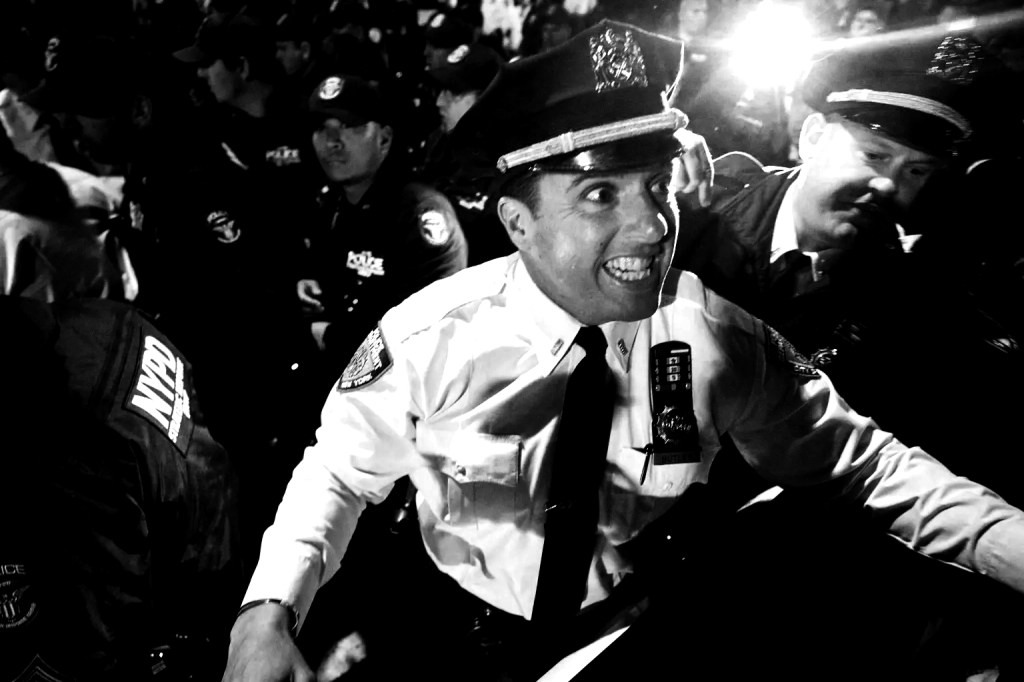
Since the uprisings in 2020 against police brutality that shook New York City and cities around the country, police have continued their role uninterrupted as defenders of the system and the white supremacist social order, despite calls from activists to defund and abolish the police. They are not public servants or “crime stoppers.” Across the country, police have been on a nonstop rampage, killing at least 1,232 people in 2023.
In NYC, the police act like tyrants, rolling out to clear homeless people off the streets and destroy what little they have to their name. They stalk Black youth outside in unmarked cars and jump out to ambush and frisk them without any pretense. They surveil protests with drones in the sky, and on the ground they beat on protesters and those who rebel against the system, with no consequences for the pigs. No matter what “de-escalation” training they get, the pigs choose to greet people suffering from mental illness episodes with bullets. They continue to get away with murder and assault with no real consequences.
All those swept up by their terror are thrown into rusted hellholes like Rikers Island and other prisons, jails, and juvenile detention centers where they face inhumane conditions and often die or are killed. People we’ve spoken to who live under the reign of mass incarceration put it best: the NYPD is the biggest gang in the country.

In 2023, Dare to Struggle conducted social investigation into police brutality in NYC to figure out how the pigs are functioning throughout the city three years after the 2020 rebellions. We went out to four public housing projects in four boroughs as well as Brownsville, South Bronx, and Jackson Heights. We asked people about their experiences of police brutality, how they see the police operating on their block, and we asked some deeper questions:
- What do you see as a better system of social regulation?
- What do you think of people brutalized by police trying to get redress through the legal system?
- What do you think of this idea that leftist activists have of abolishing the police?
We wanted to know if people see a way out of this other than what’s being put out by politicians, nonprofits, and the Left.
After dozens of conversations, we learned that the masses demand justice for victims of police brutality and for killer cops to be punished, in opposition to “abolitionist” logic. And while we still need to develop concrete solutions to crime and conflicts among the people, we see the only way through as collective struggle, not reformist politics that leave it up to politicians and nonprofits. This starts with taking a stand against every instance of police brutality, learning from groups like the Black Panthers who made it clear to the pigs that there would be consequences for killing Black and other oppressed people.
Crime and the War on Black Youth
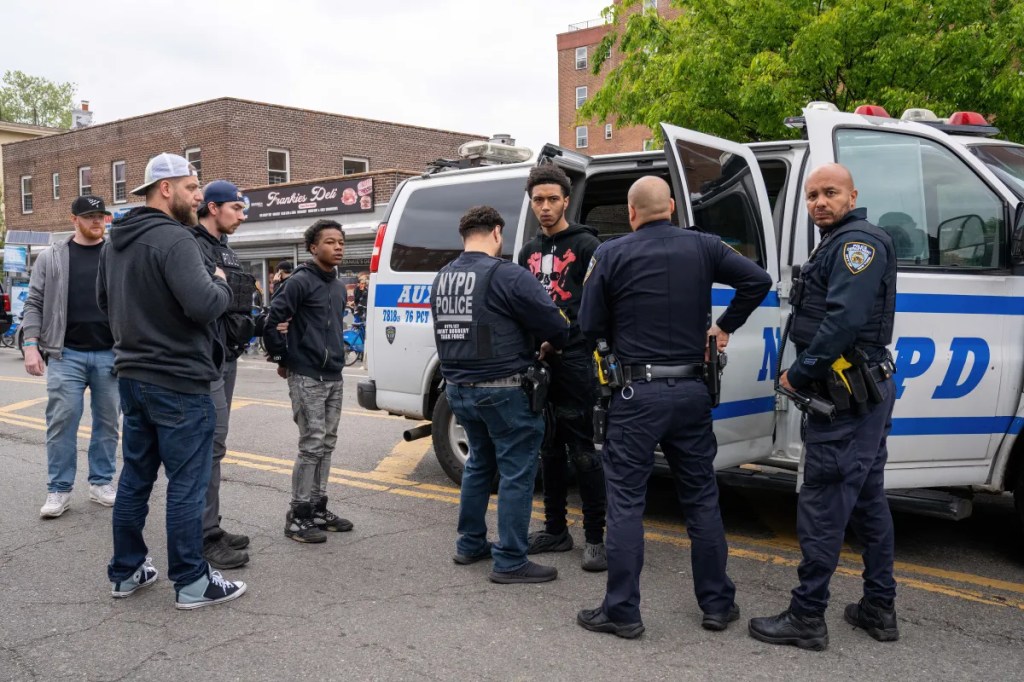
Where does crime come from in the first place? Why does it persist? “Poverty and territory,” that’s what a group of young men in Brownsville told us when we talked to them outside of a bodega across the street from cops patrolling the neighborhood. The occasional unmarked police car drove by, and it became clear that in neighborhoods like Brownsville—home to mostly poor, working, or unemployed Black people—every corner has a crew, and every block has pigs on patrol. Everybody knows their place: you know what block you can and cannot walk down, what streets you can and cannot cross. It’s either because of the gangs or the cops.
Things have only gotten worse since 2020. In the wake of the pandemic, many people faced deepening financial hardship with many left to fend for themselves. Decades of austerity policies have meant budget cuts for youth programs in neighborhoods like Brownsville and in the projects on Avenue D in the Lower East Side, so programs which used to provide an alternative to the streets are now nonexistent or financially inaccessible.
The police are more concerned with containment, and even preying on divisions among the people, than actually dealing with crime. They’re making gang rivalries worse by provoking and throwing up gang signs at those they deem as being a part of a rival gang. Some elders and concerned mothers see the main problem as youth cutting school and getting into gangs and gun battles, and blaming the youth or bad parents for the violence. They might be exaggerating a bit, but statistics do show some truth to the violence among youth and poor in NYC. According to NYPD statistics, gun violence among youth has doubled since 2019, on both sides of the barrel, as victim and perpetrator.
However, the reasons for why youth turn to running guns or selling drugs is never considered and divisions among the people help maintain this image of them. The poverty stemming from years of austerity leaving little prospects for stable employment or education has made the underground or “criminal” economy some people’s only way to make ends meet. Consequently, the police, being the enforcers of this very dispossession, are determined to keep poor Black people in a life of crime as social control. Just look at the dozens of gang raids in public housing developments over the last decade, which resulted in teenagers getting locked up often for the crime of “guilty by association” through RICO conspiracy charges.
Over the last couple of years, police have concentrated their brutality on youth and people in public housing projects. For the full scope of the urban cleansing and privatization of public housing in NYC, read our pamphlet NYCHA Disrepair and Privatization, “Urban Cleansing,” and the Battle over the Future of New York (available at daretostruggle.org). In the case of the Bronx 120, who were arrested in a police raid on the Eastchester Gardens project in 2016 and faced RICO charges, half of the arrestees were shown to have never been gang members in the first place. When the investigation into the gangs involved began, the average age of the defendants was 14 years old. The cops sit back and let crime play out until it boils over and then swoop in, only to divide and brutalize people even more and maintain their domination. That, coupled with people struggling to survive and few alternatives to make ends meet, means it’s no wonder crime continues! A pig is a pig and the police have a role to play. They use crime as an excuse to justify punishing and keeping poor Black people and others in the lowest rungs of society.
The Criminalization of Mental Illness and Homelessness
In NYC and across the country, the police are committing public executions of the mentally ill. According to the Washington Post, 20% of the victims of police shootings since 2015 have been mentally ill. People with untreated mental illness are 16 times more likely to be killed by law enforcement, and there are some estimates that a quarter to half of all police shootings involve untreated mental illness.
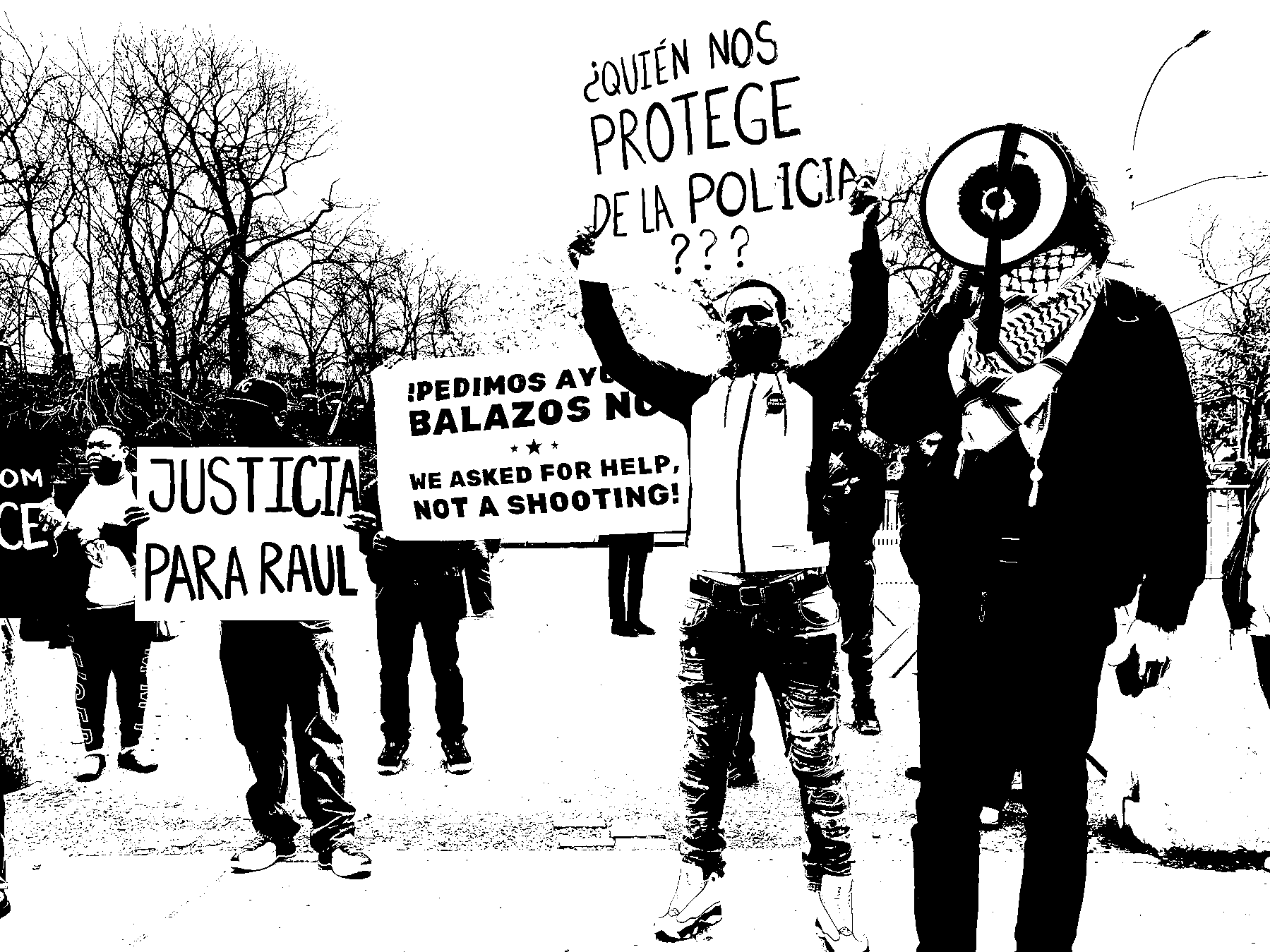
In April 2023, Dare to Struggle united with the family of Raul De La Cruz after he was shot six times by the NYPD while having a schizophrenic episode. His father called 311 for medical help, hoping to avoid police escalation. The call was re-routed to the NYPD and within 28 seconds of arriving, the two officers shot Raul. “Pedimos ayuda, balazos no!”(“We asked for help, not a shooting!”): Although (and thankfully) this encounter did not end up fatal for Raul, this chant created by the De La Cruz family highlights the reality of the criminalization of mental illness imposed on poor, immigrant, Black and Latino masses.
There have been four fatal police shootings in NYC in 2023, with three of the victims being mentally ill or going through a mental health related episode. The homeless have always included many who live at the intersection of mental illness and dispossession while being the symbol of where you end up if you don’t stay in line. In 2022, Mayor Adams made a new policy and task force with DHS, NYPD and the Department of Sanitation meant to clear homeless encampments around the city at the demand of the city’s wealthy residents and real estate developers. The homeless are constantly displaced from public areas, having their belongings destroyed in the process by joint operations between the Department of Sanitation and the NYPD. While this policy was supposed to also help homeless people in these encampments find shelter, a recent audit by the NYC comptroller found that 99.9% of people swept up have remained without shelter.
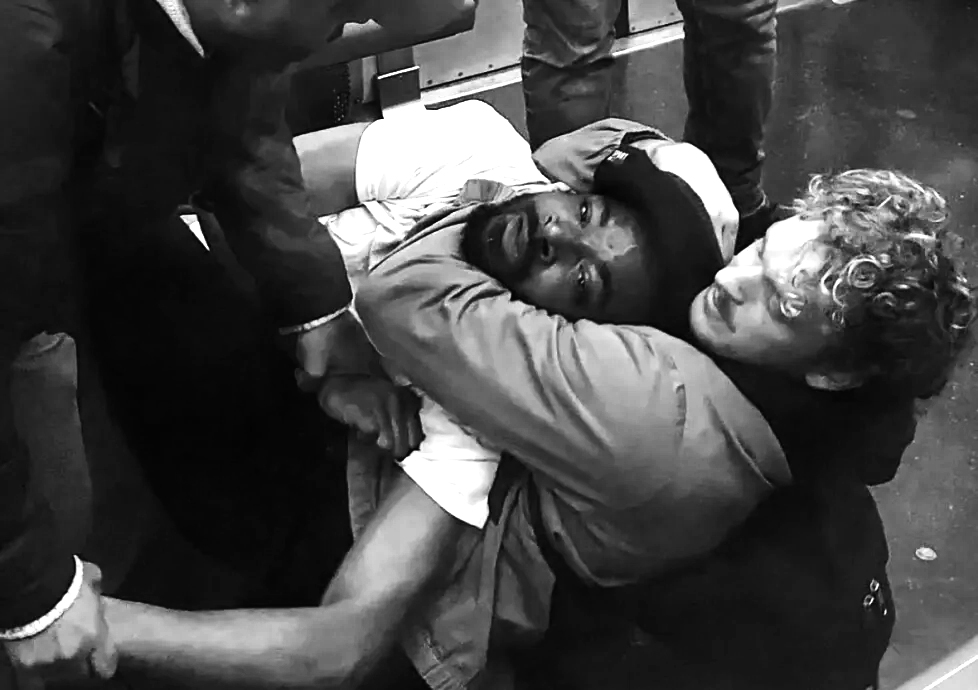
Meanwhile, vigilantes of the American Psycho variety stalk, assault, and kill homeless people. In May 2023, a former Marine named Daniel Penny murdered a homeless Black man, Jordan Neely, on the subway. Justifying these injustices, reactionary news outlets pump out sensational headlines of homeless people taking over the city, as if the homeless are not victims of a system meant to displace poor people and vilify them for their circumstances.
We Have to be the Way Out
Over the summer, we were challenged by the masses to go out when things in the neighborhood were hot and the police and youth were out: at night. These outings were intended to continue our social investigation as well as to intervene when police would harass the masses. We ran towards police sirens and looked out for the people we spoke with, asking them to come out with us to do the same, drawing lessons from the Black Panthers and groups like Anti-Racist Action who were very effective at organizing the rage of young people towards the police.
On these outings at night we learned about the particular divisions among the people from place to place and how the police play a big role in fostering and maintaining these divisions. In places like Jackson Heights, Queens where prostitution has been a regular phenomena, we heard how hands off police would be if the women out working would get messed with by men or even rival groups of women carving out territory, letting violence among this vulnerable group of people just play out. In Brownsville, we pulled up on unmarked cars to confront the police directly after they would creep around the corner observing the people we were talking with who for the most part would just be outside chilling.
In the reality of “poverty and territory” that people live under, gang rivalries and petty drama and beef are real obstacles to bringing people together. However, winning people over towards the struggle against police brutality means setting an example. In summer 2020, not everyone was on board with the rebellious actions being taken, but those who were saw examples of how to fight back mainly from those subjected to police brutality around the country. When there’s not a huge outbreak of mass protest and rebellion, the small-scale interventions and mobilizations of the people we are trying to do more of can help foster a culture of collective struggle and build up into a bigger, sustained movement.
Why do this? Because when asking the masses about what they see as an alternative to police, we were often met with “I don’t know”. When we asked about people’s thoughts on abolishing the police and prisons outright, we got a resounding “no” to the idea. As stated before, the people need real answers and solutions to the reality they live in and young or old are keenly aware that the police ain’t it.
The findings presented above aren’t the whole scope of the situation or every instance of police brutality, but they do present a basic picture of what the masses are up against. This pamphlet is an attempt to be a voice for the people subjected to police brutality and a call to unite with them to wage political battles against their enemy. We are committed to continue to unite with all those suffering under the system against the robo-cops (made of metal or flesh) deployed to murder, incarcerate, and keep the people divided.
Join our rapid response team to unite with the families of victims of police shootings in their struggles for justice. Join our night outings where we unite with youth and come to their defense against the police. And join us in strategizing how to build a sustained movement against police brutality that relies on the people, not the politicians, lawsuit lawyers, grifters, or nonprofits.
 Dare to Struggle